- Your cart is empty
- Continue Shopping


Price range: £ 148.74 through £ 1,493.32
Tadalafil is a selective phosphodiesterase type 5 (PDE5) inhibitor belonging to the dipyrazinopyrazine chemical class. Chemically designated as pyrazino[1′,2′:1,6]pyrido[3,4-b]indole-1,4-dione, 6-(1,3-benzodioxol-5-yl)-2,3,6,7,12,12a-hexahydro-2-methyl-, (6R,12aR)-. Under the Anatomical Therapeutic Chemical (ATC) system, tadalafil is indexed under G04BE08.
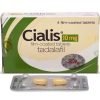
Product Context: Cialis is a globally recognized brand-name formulation originally developed by Eli Lilly. The 20 mg strength represents the maximum recommended single on-demand unit dose of tadalafil, prescribed when lower strengths (such as 10 mg) yield insufficient clinical efficacy while maintaining acceptable tolerability.
Controlled Status: Regulated as a Prescription Only Medicine (POM). It is not classified as a controlled substance, as it lacks reinforcing central nervous system properties, dependence liability, or abuse potential.
Tadalafil facilitates erectile function by enhancing the physiological nitric oxide signaling cascade during sexual stimulation:
Nitric Oxide / cGMP Pathway: Sexual stimulation triggers the local release of nitric oxide (NO) in the corpus cavernosum. Nitric oxide activates guanylyl cyclase, increasing intracellular cyclic guanosine monophosphate (cGMP) concentrations, which relaxes smooth muscle and allows blood inflow to produce an erection.
PDE5 Inhibition: Tadalafil competitively inhibits phosphodiesterase type 5 (PDE5), the enzyme responsible for degrading cGMP in the corpus cavernosum and lower urinary tract tissues.
Extended Pharmacodynamic Profile: Tadalafil exhibits high selectivity for PDE5. Its unique structural properties yield an exceptionally long elimination half-life, enabling a duration of therapeutic efficacy that persists for up to 36 hours post-dose.
Licensing for Cialis 20 mg includes:
Erectile Dysfunction (ED): Treatment of erectile dysfunction, defined as the inability to achieve or maintain a penile erection sufficient for satisfactory sexual performance.
Benign Prostatic Hyperplasia (BPH): Treatment of the signs and symptoms of benign prostatic hyperplasia (when co-prescribed or formulated for daily regimens, though 20 mg is specifically an on-demand strength).
Dosing & Administration Regimen:
On-Demand Dosing: Typically administered orally prior to anticipated sexual activity. Because tadalafil remains effective for up to 36 hours, it grants greater temporal flexibility than short-acting PDE5 inhibitors.
Strength Scope & Titration: The 20 mg strength is the maximum single on-demand dose. It is reserved for patients who do not achieve adequate efficacy with the 10 mg dose and who have demonstrated good overall tolerability.
Frequency Restrictions: Do not exceed one dose per 24-hour period. Daily use of the 20 mg strength is not recommended; continuous daily management utilizes lower strengths (such as 2.5 mg or 5 mg).
Administration Precautions: Can be taken with or without food, as food does not significantly affect absorption rate or extent.
Absorption: Readily absorbed following oral administration, with mean maximum plasma concentrations () achieved at a median time of 2 hours post-dose. Oral bioavailability is independent of food intake.
Distribution: Distributes extensively into body tissues, with an average apparent volume of distribution of approximately 63 liters. Plasma protein binding is high (~94%).
Biotransformation: Extensively metabolized in the liver primarily via the Cytochrome P450 enzyme system, specifically CYP3A4, into inactive metabolites (predominantly methylcatechol glucuronide).
Elimination: Excreted predominantly as metabolites via the feces (~61%) and to a lesser extent in the urine (~36%). Tadalafil is characterized by a prolonged terminal elimination half-life of approximately 17.5 hours in healthy subjects, accounting for its extended 36-hour duration of clinical action.
Tadalafil induces systemic vasodilation, smooth muscle relaxation in the vasculature and genitourinary tract, and mild autonomic modulation.
Very Common (): Headache, dyspepsia.
Common ( to ): Back pain, myalgia, nasopharyngitis, pain in extremity, flushing, nasal congestion, dizziness.
Uncommon ( to ): Visual disturbances (including blurred vision, cyanopsia, eye pain), dyspnea, hypotension, hypertension, palpitations, tachycardia, abdominal pain, gastroesophageal reflux, rash, hyperhidrosis.
Rare / Severe (<1/1,000): Sudden vision loss (non-arteritic anterior ischemic optic neuropathy – NAION), sudden hearing loss or deafness, severe cardiovascular events (myocardial infarction, sudden cardiac death, unstable angina), priapism (prolonged erections exceeding 4 hours), and severe hypersensitivity reactions (including angioedema and urticaria).
Known hypersensitivity to tadalafil or formulation excipients.
Concomitant Nitrates or Nitric Oxide Donors: Absolute contraindication. Co-administration with organic nitrates (e.g., nitroglycerin, isosorbide dinitrate, amyl nitrite “poppers”) can trigger profound, life-threatening systemic hypotension.
Concomitant Guanylate Cyclase Stimulators: Co-administration with riociguat is strictly contraindicated due to synergistic hypotensive effects.
Severe Cardiovascular Disease: Patients with myocardial infarction within the last 90 days, unstable angina, severe heart failure, or uncontrolled arrhythmias/hypertension.
Severe hepatic impairment or end-stage renal disease.
Alpha-Blockers (e.g., Doxazosin, Tamsulosin): Co-administration can provoke symptomatic postural hypotension and dizziness due to additive vasodilatory effects; caution and stability on alpha-blocker therapy are required.
Potent CYP3A4 Inhibitors (e.g., Ketoconazole, Ritonavir, Clarithromycin): Inhibit tadalafil clearance, significantly increasing systemic exposure and adverse event risks.
CYP3A4 Inducers (e.g., Rifampicin, Carbamazepine, St. John’s Wort): Accelerate tadalafil metabolism, substantially reducing plasma concentrations and therapeutic efficacy.
Cardiovascular Status Evaluation: Assess cardiovascular risk prior to initiating ED treatment, as sexual activity carries an inherent cardiac burden.
Prolonged Action & Adverse Management: Advise patients that tadalafil’s extended half-life (up to 36 hours) means adverse effects like myalgia, back pain, or headache may persist longer than with shorter-acting PDE5 inhibitors. Instruct patients to seek emergency medical care for prolonged erections exceeding 4 hours to prevent permanent erectile tissue damage.
| 20mg/40mg | 12 Pills, 24 Pills, 48 Pills, 96 Pills, 120 Pills |
|---|
 English English
  German
 Italian
 Dutch
Dutch
 Spanish