- Tu carrito está vacío
- Continuar comprando


£ 295.26
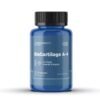
Unlicensed multi-peptide and phytoestrogen complex, investigated for epigenetic modulation, vascular health, and female neuroendocrine regulation.
BioFemale Geroprotector is a multi-constituent, organ-specific biological response modifier and dietary formulation designed to address cellular and endocrine aspects of female biological senescence. Chemically, the preparation combines low-molecular-weight mammalian peptide fractions (predominantly cytomax complexes isolated from ovarian tissue [Zhenoluten/A-15], vascular wall tissue [Ventfort/A-3], and neuroendocrine pineal tissue [Endoluten/A-8] with an upper molecular mass threshold restricted below $5\text{ to }10\text{ kDa}$) with targeted polyphenolic and micronutrient compounds. These non-peptide co-factors frequently include standardized isoflavones (such as genistein and daidzein from Glycine max), pyridine nucleotide precursors (nicotinamide mononucleotide [NMN] or nicotinamide riboside [NR]), and lipophilic antioxidants (such as trans-resveratrol). The active components are encapsulated in hard gelatin or hydroxypropyl methylcellulose (HPMC) shells with pharmaceutical-grade excipients, including microcrystalline cellulose, magnesium stearate, and colloidal silicon dioxide.
Within the United Kingdom regulatory framework, BioFemale Geroprotector holds no marketing authorisation (MA) from the Medicines and Healthcare products Regulatory Agency (MHRA). It is not catalogued in the British National Formulary (BNF) and is not scheduled as a Prescription Only Medicine (POM), Pharmacy (P) medicine, or General Sales List (GSL) drug under the Human Medicines Regulations 2012. Within the UK, this product is commercialised strictly as a non-medicinal food supplement under the Food Safety Act 1990 and the Nutrition and Health Claims (England) Regulations. Commercial vendors and distributors are legally prohibited from articulating therapeutic or medicinal claims regarding the prevention, diagnosis, mitigation, or reversal of clinically established gynaecological, metabolic, or vascular pathologies (such as premature ovarian insufficiency [POI], post-menopausal osteoporosis, cardiovascular disease, climacteric syndrome, or hormone-dependent malignancies).
The pharmacodynamic profile of BioFemale Geroprotector is rooted in multi-targeted epigenetic transactivation, microvascular endothelial stabilization, and endocrine metabolic modulation:
Epigenetic and Transcriptional Regulation: The ultra-short peptide bioregulators (comprising di-, tri-, and tetrapeptide sequences) cross cellular boundaries and translocate through nuclear pore complexes. Within the nucleoplasm of ovarian theca and granulosa cells, vascular endothelial cells, and pinealocytes, these peptides bind site-specifically to the major and minor grooves of genomic DNA and core histone octamers. This promotes chromatin remodeling from transcriptionally repressed heterochromatin into open euchromatin, recruiting RNA polymerase II and stimulating the transcription of structural and functional genes that undergo age-associated downregulation.
Ovarian Follicular and Endocrine Support: The ovarian peptide fraction supports the transcription of aromatase ($CYP19A1$) and follicle-stimulating hormone receptors (FSHR) in surviving granulosa cells. Concurrently, natural isoflavones bind competitively to oestrogen receptor beta ($ER\beta$) with higher affinity than oestrogen receptor alpha ($ER\alpha$), providing weak, tissue-selective estrogenic modulation that supports basal cellular signaling without inducing endometrial hyperplasia.
Vascular Endothelial Homeostasis: The vascular peptide fraction, alongside polyphenols like resveratrol, promotes endothelial nitric oxide synthase (eNOS) transcription and enzymatic activation. This enhances basal nitric oxide ($NO$) generation, improves vascular smooth muscle relaxation, reduces flow-mediated microvascular resistance, and attenuates arterial wall stiffness commonly exacerbated by post-menopausal oestrogen withdrawal.
Cellular Longevity and Senescence Pathways: Pineal peptide fractions induce telomerase reverse transcriptase (hTERT) expression, preserving telomere cap integrity during mitotic division. Concurrently, pyridine precursors (NMN/NR) replenish intracellular $NAD^+$ pools, activating sirtuin 1 (SIRT1) deacetylase activity. This suppresses nuclear factor kappa B (NF-$\kappa$B) phosphorylation, attenuating the senescence-associated secretory phenotype (SASP) and downregulating downstream pro-inflammatory cytokines (IL-1$\beta$, IL-6, TNF-$\alpha$).
Cytoprotection and Mitochondrial Stability: The complex enhances the expression of endogenous antioxidant enzymes, including superoxide dismutase (SOD) and glutathione peroxidase, preserving mitochondrial membrane potential ($\Delta\Psi_m$) and mitigating oxidative stress-mediated apoptosis in endocrine and endothelial targets.
BioFemale Geroprotector possesses no approved clinical indications in the United Kingdom. No randomized, double-blind, multicentre clinical trials meeting the regulatory standards of the MHRA have been conducted to establish clinical efficacy, therapeutic reproducibility, or long-term safety profiles.
The National Institute for Health and Care Excellence (NICE) does not endorse, recommend, or integrate BioFemale Geroprotector into any formal clinical management pathway. It is absent from clinical guidelines governing menopause: diagnosis and management (NG23), osteoporosis: assessing the risk of fragility fracture (CG146), and cardiovascular disease: risk assessment and reduction (NG238).
The application of BioFemale Geroprotector is confined strictly to non-clinical consumer health management and preliminary laboratory research. In exploratory literature and functional wellness sectors, it is investigated for:
Nutritional support of the neuroendocrine and female reproductive systems during chronological ageing and perimenopausal transitions.
Complementary management of cellular oxidative stress and low-grade vascular inflammation in ageing female cohorts.
Maintenance of baseline microcirculatory perfusion, skin elasticity, and general physical vitality in post-menopausal women.
Preclinical animal models examining biological ageing markers, preservation of oestrus cyclicity, and delayed onset of age-related arterial stiffening.
BioFemale Geroprotector holds no status within the NHS drug tariff, cannot be prescribed on NHS prescription forms (FP10), and must never replace validated clinical treatments, including licensed hormone replacement therapy (HRT; e.g., transdermal oestradiol, micronised progesterone), bisphosphonates or denosumab for osteoporosis, statins for cardiovascular primary/secondary prevention, or licensed anti-hypertensive therapeutics.
Because BioFemale Geroprotector is formulated as an oral capsule, its pharmacokinetic disposition reflects the combined behavior of its peptide, polyphenol, and nucleotide constituents:
Absorption:
Peptides: Short-chain oligopeptides resist complete brush-border hydrolysis and are absorbed intact across enterocyte apical membranes via the proton-coupled peptide transporter 1 (PEPT1), reaching peak systemic concentrations ($T_{max}$) within 20 to 50 minutes.
Polyphenols & Isoflavones: Resveratrol and isoflavones undergo rapid intestinal uptake but exhibit low systemic oral bioavailability ($<5\%$) due to extensive Phase II enterocyte and hepatic conjugation.
NMN/NR: Transported rapidly across the intestinal epithelium via specialized transporters or hydrolysed to nicotinamide prior to enterocyte absorption, rapidly entering the systemic $NAD^+$ biosynthetic salvage pathway.
Distribution: Hydrophilic peptide fragments and $NAD^+$ intermediates distribute rapidly throughout total body water with an apparent volume of distribution ($V_d$) approximating extracellular fluid volume. Preclinical biodistribution assays demonstrate relative tropism of the peptide constituents toward female reproductive organs, vascular endothelium, and neuroendocrine centers. Absorbed polyphenols and isoflavone aglycones bind extensively to circulating serum albumin ($>90\%$).
Biotransformation: Peptide bioregulators do not interact with or undergo clearance via hepatic cytochrome P450 (CYP450) microsomal enzymes; they are rapidly hydrolysed by systemic and tissue aminopeptidases into endogenous constituent L-amino acids. Botanical constituents (resveratrol, isoflavones) undergo extensive hepatic Phase II metabolism via UDP-glucuronosyltransferases (UGT1A1, UGT1A9) and sulfotransferases (SULTs) to form inactive glucuronide and sulfate conjugates.
Elimination: Systemic elimination of intact peptides is rapid, with an elimination half-life ($t_{1/2}$) of 15 to 60 minutes; metabolic end-products are incorporated into endogenous protein synthesis or cleared as urinary urea. Botanical metabolites are excreted predominantly via the kidneys in urine and through bile into faeces, with terminal half-lives ranging from 2 to 9 hours.
The primary physiological effect reported in preclinical investigations is the attenuation of age-associated neuroendocrine blunting, characterized by stabilized gonadotrophin and oestrogen balance, preserved microvascular reactivity, reduction of cellular lipid peroxidation, and modulation of systemic inflammatory markers (such as high-sensitivity C-reactive protein [hs-CRP]). In animal models of accelerated reproductive ageing, these complexes demonstrate structural maintenance of ovarian follicular pools, reduced vascular endothelial senescence, and improved lipid metabolic parameters without inducing neoplastic transformations.
Because BioFemale Geroprotector has not undergone structured, large-scale Phase I–IV clinical pharmacovigilance surveillance, documentation of adverse drug reactions is derived primarily from observational cohorts and preclinical toxicology:
Very Common ($\ge 1/10$): None documented in clinical literature.
Common ($1/100$ to $<1/10$): Mild, self-limiting gastrointestinal symptoms following oral intake, including transient nausea, epigastric fullness, mild dyspepsia, abdominal bloating, and loose stools.
Uncommon ($1/1,000$ to $<1/100$): Transient breast tenderness or mastalgia; mild alterations in menstrual cycle duration or bleeding intensity in perimenopausal women; mild cephalalgia; localized cutaneous pruritus or macular rash.
Rare ($1/10,000$ to $<1/1,000$): Type I immediate allergic hypersensitivity reactions (urticaria, angioedema, or bronchospasm), principally triggered in atopic individuals sensitized to bovine structural proteins, gelatin, or soy-derived isoflavones.
Biological and Diagnostic Hazards: Unregulated preparations derived from non-certified mammalian sources carry theoretical risks of transmissible spongiform encephalopathies (TSE/BSE) if origin verification is absent. Crucially, self-administering unlicensed bioregulators to manage post-menopausal bleeding, progressive pelvic pain, breast changes, or acute cardiovascular symptoms presents a critical clinical hazard by potentially delaying diagnostic evaluation for endometrial carcinoma, breast malignancy, acute coronary syndromes, or severe osteoporotic vertebral fractures.
The handling and administration of BioFemale Geroprotector require strict adherence to fundamental gynaecological, oncological, and pharmacological safety parameters:
Contraindications:
Documented hypersensitivity or history of allergic anaphylaxis to bovine-derived biological substances, gelatin, soy products, isoflavones, or any constituent formulation excipients.
Oestrogen-dependent malignancies: Absolute contraindication in patients with known, suspected, or previous history of breast carcinoma, endometrial adenocarcinoma, or oestrogen-receptor-positive neoplasms. Modulating estrogenic receptors or cellular transcriptional pathways in hormone-sensitive neoplastic tissue presents significant oncological hazards.
Undiagnosed abnormal uterine or vaginal bleeding: Absolute contraindication; unexplained bleeding in perimenopausal or post-menopausal women requires urgent investigation to exclude structural disease or malignancy.
Active thromboembolic disorders: Contraindicated in patients with active deep vein thrombosis (DVT), pulmonary embolism (PE), or a history of oestrogen-associated venous thromboembolism.
Pregnancy and lactation: Absolute contraindication due to an absence of embryotoxicity, teratogenicity, and developmental reproductive safety data, alongside unknown secretion into human breast milk.
Paediatric population: Contraindicated in infants, children, and adolescents under 18 years due to an absence of safety and developmental data in the maturing paediatric female reproductive system.
Drug Interactions:
Hormone Replacement Therapy (HRT) and Oral Contraceptives: Concomitant administration may result in unpredictable pharmacodynamic competition at oestrogen receptor sites due to isoflavone constituents.
Tamoxifen, Aromatase Inhibitors, and Fulvestrant: Concurrent use with licensed anti-oestrogen oncological therapies is contraindicated; phytoestrogens and regulatory peptides may interfere with therapeutic endocrine blockade.
Anticoagulant and Antiplatelet Drugs (e.g., warfarin, DOACs, clopidogrel, aspirin): Concomitant administration of resveratrol and polyphenols may exert additive mild antiplatelet effects, warranting coagulation surveillance.
Cytochrome P450 interactions: There are no documented clinically significant pharmacokinetic induction or inhibition interactions with hepatic CYP450 isoenzymes.
Clinical Precautions:
Gynaecological Alarm Symptoms (“Red Flags”): Patients presenting with red flag symptoms—such as post-menopausal vaginal bleeding, palpable breast lumps or nipple inversion/discharge, sudden severe pelvic pain, or rapid abdominal distension with early satiety—mandate immediate two-week-wait clinical referral rather than self-directed supplementation.
Menopause Assessment: Women suffering from debilitating vasomotor symptoms (hot flushes, night sweats), severe mood disturbance, or bone mineral density loss require structured clinical evaluation—including fracture risk assessment (FRAX), DEXA bone scanning, and discussion of evidence-based HRT—prior to introducing non-medicinal products.
Source Purity: Clinicians and researchers must verify that natural mammalian extracts possess documented batch-specific certification confirming extraction from BSE-free herds and compliance with UK/EU biological safety criteria.


 English English
  German
 Italian
 Dutch
Dutch
 Spanish

Reseñas
Todavía no hay reseñas.