- Tu carrito está vacío
- Continuar comprando


Rango de precios: £ 92.50 por £ 560.92
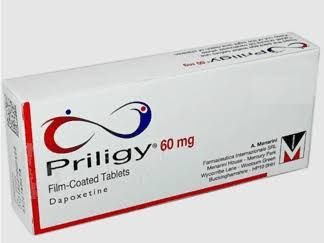
Dapoxetine is a selective serotonin reuptake inhibitor (SSRI) possessing a short pharmacokinetic profile specifically engineered for on-demand use rather than chronic daily administration. Chemically designated as (+)-(1S)-3-(naphthalen-2-yloxy)-1-phenyl-propan-1-amine hydrochloride. Under the Anatomical Therapeutic Chemical (ATC) system, dapoxetine is indexed under G04BX14.
Product Context: The 60 mg strength represents the maximum recommended unit dose of dapoxetine prescribed when the lower 30 mg starting dose yields insufficient clinical efficacy while maintaining acceptable tolerability.
Controlled Status: Regulated as a Prescription Only Medicine (POM). It is not classified as a controlled substance, as it lacks reinforcing central nervous system properties or abuse liability.
Dapoxetine exerts its therapeutic effects by enhancing serotonergic neurotransmission within the central nervous system:
Serotonin Transporter Inhibition: Selectively binds to and inhibits the presynaptic serotonin transporter (SERT), preventing the reuptake of serotonin into nerve terminals.
Ejaculatory Reflex Modulation: By increasing synaptic serotonin availability at spinal and supraspinal levels (particularly within the nucleus paragigantocellularis), dapoxetine modulates the sympathetic, parasympathetic, and somatic neural pathways that control the ejaculatory reflex, thereby prolonging intravaginal ejaculatory latency time (IELT) and improving control over ejaculation.
Licensing for dapoxetine includes:
Premature Ejaculation (PE): Treatment of premature ejaculation in adult men aged 18 to 64 years presenting with poor control over ejaculation, significant personal distress, or interpersonal difficulty.
Dosing & Administration Regimen:
On-Demand Dosing Schedule: Administered orally 1 to 3 hours prior to anticipated sexual activity. It is never indicated for continuous daily use.
Titration & Strength Scope: Therapy is typically initiated at 30 mg. If the 30 mg dose provides inadequate clinical response and adverse events are manageable, the dose may be increased to the maximum recommended 60 mg strength.
Frequency Restrictions: Do not take more than one dose in any 24-hour period.
Administration Precautions: Tablets must be swallowed whole with at least a full glass of water to minimize the risk of syncope or orthostatic hypotension. Can be taken with or without food.
Absorption: Rapidly absorbed following oral ingestion, with peak plasma concentrations () achieved approximately 1 to 2 hours post-dose. Oral bioavailability is dose-dependent, ranging from 15% to 42%.
Distribution: Rapidly distributes into body tissues, with high plasma protein binding exceeding 99%.
Biotransformation: Extensively metabolized in the liver and kidneys by multiple enzyme systems, primarily CYP3A4, CYP2D6, and flavin monooxygenase 1 (FMO1), into active and inactive metabolites (such as desmethyldapoxetine and dapoxetine-N-oxide).
Elimination: Excreted primarily via the kidneys in urine as metabolites. The terminal elimination half-life is short, declining to approximately 1.5 to 2 hours within 24 hours post-dose, which minimizes drug accumulation with on-demand use.
Dapoxetine alters autonomic tone, lowers blood pressure upon standing, and modifies central serotonergic activity.
Very Common (): Nausea, dizziness, headache.
Common ( to ): Diarrhea, insomnia, fatigue, somnolence, nasopharyngitis, anxiety, agitation, restlessness, erectile dysfunction, blurred vision, hyperhidrosis, abdominal pain, dyspepsia.
Uncommon ( to ): Syncope (fainting), orthostatic hypotension, flushing, tremor, mydriasis, vertigo, tachycardia, depressed mood, bruxism.
Rare / Severe (<1/1,000): Sudden drop in blood pressure leading to loss of consciousness (vasovagal syncope), suicidal ideation, severe allergic reactions, and seizures.
Known hypersensitivity to dapoxetine or formulation excipients.
Significant underlying cardiac disease (e.g., heart failure, conduction abnormalities, significant ischemic heart disease, history of syncope).
Concomitant use with Monoamine Oxidase Inhibitors (MAOIs), or within 14 days of discontinuing MAOI therapy (risk of serotonin syndrome). Similarly, MAOIs must not be initiated within 7 days of stopping dapoxetine.
Concomitant use with thioridazine, serotonin reuptake inhibitors (SSRIs, SNRIs), tricyclic antidepressants, or other potent centrally acting agents.
Moderate-to-severe hepatic impairment.
Concurrent use with potent CYP3A4 inhibitors (e.g., ketoconazole, ritonavir, clarithromycin).
Monoamine Oxidase Inhibitors (MAOIs): Absolute contraindication due to risk of fatal serotonin syndrome (hyperthermia, rigidity, myoclonus, autonomic instability).
Potent CYP3A4 Inhibitors: Escalate dapoxetine exposure and adverse event risks.
PDE5 Inhibitors (e.g., Sildenafil, Tadalafil): Co-administration with erectile dysfunction medications can theoretically provoke orthostatic hypotension or dizziness; evaluate patient hemodynamic status prior to combination use.
Alcohol: Concurrent alcohol consumption exacerbates neurocognitive impairment, dizziness, somnolence, and increases the risk of orthostatic syncope.
Orthostatic Hypotension & Syncope Screening: Patients must be warned about the risk of fainting or lightheadedness upon standing up quickly. If prodromal symptoms (such as nausea, dizziness, or cold sweat) occur, patients should lie down immediately or sit with their head between their knees until symptoms resolve.
Psychiatric Screening: Screen patients for history of mania, bipolar disorder, or severe depression before initiation, as serotonergic agents can precipitate manic episodes or alter mood stability.
| 60 mg | 60 pastillas, 90 pastillas, 120 pastillas, 180 pastillas, 270 pastillas, 360 pastillas |
|---|


 English English
  German
 Italian
 Dutch
Dutch
 Spanish