- Tu carrito está vacío
- Continuar comprando


£ 18.50
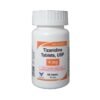
Comprehensive UK clinical and regulatory monograph on Tamsulosin 0.4mg detailing subtype-selective $\alpha_{1\text{A}}/\alpha_{1\text{D}}$-adrenoceptor antagonism, lower urinary tract pharmacodynamics, Intraoperative Floppy Iris Syndrome (IFIS), and BNF/NICE prescribing standards.
Tamsulosin 0.4mg is a licensed branded and generic oral pharmaceutical preparation (originally developed and marketed under innovator proprietary brands such as Flomaxtra XL, Flomax, and Diffundox). Chemically designated as $(5R)\text{-5-[2-[[2-(2-ethoxyphenoxy)ethyl]amino]propyl]-2-methoxybenzenesulfonamide}$, tamsulosin is a synthetic, non-quinazoline sulfamoylphenethylamine derivative belonging to the selective $\alpha_1$-adrenoceptor antagonist (alpha-blocker) chemical class. Structurally, it features a sulfonamide moiety linked to a chiral phenethylamine core, synthesized and marketed exclusively as the pure, active $(R)\text{-enantiomer}$ (which exhibits an affinity for target adrenoceptors approximately 20 to 100 times greater than the corresponding $(S)\text{-enantiomer}$). Its empirical molecular formula is $\text{C}_{20}\text{H}_{28}\text{N}_2\text{O}_5\text{S}$, with an average molecular weight of $408.51\text{ g/mol}$ (formulated as the hydrochloride salt: $\text{C}_{20}\text{H}_{28}\text{N}_2\text{O}_5\text{S}\cdot\text{HCl}$, molecular weight $444.97\text{ g/mol}$).
Standard solid oral presentations of Tamsulosin 0.4mg in the United Kingdom utilize modified-release delivery technologies to attenuate sharp peak plasma spikes and prolong clinical duration:
Modified-Release Hard Capsules (e.g., Flomax): Gelatin capsules containing enteric-coated, modified-release micro-pellets designed for gradual gastrointestinal dissolution.
Prolonged-Release Tablets (e.g., Flomaxtra XL / Oral Controlled Absorption System – OCAS): Hydrophilic matrix tablets that hydrate into a non-disintegrating gel layer upon entering the gastrointestinal tract, ensuring continuous, zero-order drug release independent of food intake across the colon.
Standard non-active pharmaceutical excipients include microcrystalline cellulose, methacrylic acid-ethyl acrylate copolymer, triacetin, polysorbate 80, sodium laurilsulfate, talc, colloidal anhydrous silica, hypromellose, polyethylene glycol, and approved colorants (such as iron oxide red/yellow E172 and titanium dioxide E171).
Within the United Kingdom regulatory framework:
Medicinal Classification: Tamsulosin 0.4mg is categorized as a Prescription Only Medicine (POM) for general clinical indications. Under specific reclassification arrangements, proprietary brands (e.g., Flomax Relief 0.4mg) are licensed as Pharmacy (P) medicines for over-the-counter supply by a registered pharmacist strictly to men aged 45 to 75 years presenting with lower urinary tract symptoms (LUTS) suggestive of benign prostatic hyperplasia (BPH), following structured diagnostic consultation and referral protocols.
Controlled Drug Status: Tamsulosin is not a controlled substance under the Misuse of Drugs Act 1971 or the Misuse of Drugs Regulations 2001.
Tamsulosin possesses zero intrinsic abuse liability, central dependence, or recreational potential. However, inappropriate unsupervised supply or off-label utilization without adequate differential screening introduces recognized clinical hazards: masking underlying prostate or urothelial carcinoma, precipitation of acute orthostatic hypotension in cardiovascularly frail cohorts, and unmonitored cataract surgery resulting in severe ophthalmic trauma secondary to Intraoperative Floppy Iris Syndrome (IFIS).
The pharmacodynamic profile of tamsulosin is defined by competitive, subtype-selective antagonism of post-junctional $\alpha_1$-adrenoceptors, selectively targeting the dynamic obstruction of the bladder outflow tract:
Subtype Selectivity ($\alpha_{1\text{A}}$ y $\alpha_{1\text{D}}$ Preferential Affinity): Unlike non-selective first-generation alpha-blockers (such as doxazosin, terazosin, and prazosin, which display near-equal affinity across all $\alpha_1$ subtypes), tamsulosin exhibits high preferential binding affinity for the $\alpha_{1\text{A}}$ y $\alpha_{1\text{D}}$ adrenoceptor subtypes over the $\alpha_{1\text{B}}$ subtype (selectivity ratio ranging from $10:1$ to $38:1$):
$\alpha_{1\text{A}}$ Subtype (Prostatic Smooth Muscle): Predominates within the human prostate stroma, prostatic capsule, bladder neck, and proximal prostatic urethra ($\sim 70\%$ of local adrenoceptor density). Stimulation of $\alpha_{1\text{A}}$ receptors via the $G_{\alpha q/11}$-phospholipase C-inositol trisphosphate ($\text{IP}_3$) pathway increases intracellular calcium, mediating smooth muscle contraction. Tamsulosin competitively blocks these receptors, relaxing smooth muscle tone, relieving dynamic bladder outflow obstruction, and increasing urinary peak flow rates ($Q_{max}$).
$\alpha_{1\text{D}}$ Subtype (Detrusor and Spinal Afferents): Predominates in the detrusor muscle of the urinary bladder dome and the spinal sacral micturition center. Blockade of $\alpha_{1\text{D}}$ receptors reduces detrusor overactivity and blunts sensory afferent firing, directly mitigating irritative/storage lower urinary tract symptoms (urgency, nocturia, urinary frequency).
$\alpha_{1\text{B}}$ Subtype (Vascular Smooth Muscle): Predominates in peripheral arterial and venous resistance vessels, where it regulates baseline systemic vascular resistance (SVR) and arterial blood pressure. Tamsulosin’s relatively low affinity for $\alpha_{1\text{B}}$ preserves systemic blood pressure control and significantly blunts the incidence of severe orthostatic hypotension and reflex tachycardia compared to non-selective alpha-blockers.
Ureteral Dynamics: Tamsulosin blocks $\alpha_{1\text{A}}$ y $\alpha_{1\text{D}}$ receptors situated within the distal ureter, decreasing ureteral peristaltic spasm and baseline luminal pressure, which enhances spontaneous calculus passage through the vesicoureteral junction.
Lack of Direct 5-Alpha Reductase or Endocrine Modulation: Tamsulosin acts purely on dynamic functional smooth muscle tone; it exerts no inhibitory activity on $5\alpha\text{-reductase}$ isoenzymes, does not reduce static prostate glandular volume, and does not alter serum prostate-specific antigen (PSA) concentrations.
Tamsulosin 0.4mg holds licensed therapeutic indications within the British National Formulary (BNF) and National Institute for Health and Care Excellence (NICE) guidelines:
Lower Urinary Tract Symptoms (LUTS) Associated with Benign Prostatic Hyperplasia (BPH):
Indicated for the treatment of moderate-to-severe lower urinary tract symptoms (both voiding symptoms [hesitancy, weak stream, intermittency, straining] and storage symptoms [urgency, frequency, nocturia]) in adult males with benign prostatic obstruction.
Clinical Positioning (NICE CG97 / NG267): NICE guidelines for lower urinary tract symptoms in men position alpha-blockers (such as tamsulosin 0.4mg once daily) as the first-line pharmacological monotherapy when moderate-to-severe voiding symptoms are present.
Standard Dosing: $0.4\text{ mg}$ once daily. Conventional modified-release capsules should be administered after breakfast or the same meal each day. Prolonged-release matrix tablets (OCAS formulation) may be taken with or without food.
Combination Therapy for Moderate-to-Severe BPH (NICE Clinical Pathways):
Indicated in combination with a $5\alpha\text{-reductase}$ inhibitor (e.g., finasteride $5\text{ mg}$ or dutasteride $0.5\text{ mg}$; available as fixed-dose combination formulations like Combodart) in men with moderate-to-severe symptoms, an enlarged prostate ($>30\text{ g}$ o $\text{PSA} > 1.4\text{ to }1.5\text{ ng/mL}$), and high risk of disease progression, acute urinary retention (AUR), or requiring surgery. Tamsulosin provides rapid symptomatic relief within days, while the $5\alpha\text{-reductase}$ inhibitor drives gradual glandular volume reduction over 6 to 12 months.
Medical Expulsive Therapy (MET) for Ureteral Calculi (Off-Label UK Practice):
Recommended within NICE Clinical Guideline NG118 (Renal and ureteric stones) as medical expulsive therapy to facilitate the spontaneous passage of distal ureteric stones measuring between $5\text{ mm}$ y $10\text{ mm}$ in patients who do not require immediate surgical intervention or stenting. Standard off-label regimen: $0.4\text{ mg}$ once daily for up to 4 to 6 weeks.
Symptomatic Management of Chronic Pelvic Pain Syndrome / Non-Bacterial Prostatitis (Off-Label):
Deployed as adjunctive treatment to relieve chronic pelvic aching, dysuria, and dynamic urethral spasm in adult males ($0.4\text{ mg}$ daily for a trial period of 6 to 12 weeks).
The pharmacokinetic parameters of tamsulosin are shaped by its specialized delivery matrix, complete intestinal absorption, and extensive hepatic biotransformation:
Absorption: Following oral administration of modified-release formulations, tamsulosin is absorbed almost completely ($>90\%$) across the intestinal tract.
Modified-Release Capsules: Fasting accelerates transit and elevates peak plasma concentrations; administration under fasted conditions increases $C_{max}$ by $30\%$ and bioavailability by $20\%$ compared to the fed state. To maintain consistent, blunted peak concentrations, standard capsules are mandated to be taken immediately postprandially (after breakfast or the same meal each day). $T_{max}$ is achieved within 6 hours in the fed state.
Prolonged-Release Tablets (OCAS): The gel matrix hydrates uniformly throughout the small intestine and colon, delivering consistent zero-order release. Pharmacokinetics are bioequivalent in the fed and fasted states ($T_{max} \approx 4\text{ to }6\text{ hours}$), eliminating dietary timing constraints.
Distribution: Tamsulosin is moderately lipophilic ($\text{LogP} \approx 2.3$) with an apparent volume of distribution ($V_d$) of approximately $0.2\text{ L/kg}$, indicative of limited extravascular tissue sequestration. In circulating human plasma, tamsulosin is extensively bound to plasma proteins ($99\%$ bound), binding with high affinity predominantly to $\alpha_1$-acid glycoprotein (AAG) and to a lesser extent human serum albumin. The free, pharmacologically active fraction constitutes only $\sim 1\%$ of circulating drug.
Biotransformation (The CYP3A4 / CYP2D6 Axis): Systemic clearance is mediated almost exclusively by hepatic microsomal biotransformation via cytochrome P450 isoenzymes, followed by Phase II conjugation:
Phase I Oxidation: Biotransformation is catalyzed primarily by cytochrome P450 3A4 (CYP3A4) y cytochrome P450 2D6 (CYP2D6):
Dealkylation of the ethoxyphenoxy side chain yields metabolite M-1.
Hydroxylation of the benzene and sulfonamide rings generates secondary hydroxylated metabolites (M-3, M-4).
Demethylation of the methoxy group yields metabolite AM-1.
Metabolite Activity: While select circulating metabolites retain adrenoceptor antagonist properties, they possess significantly lower affinity and selectivity than intact $(R)\text{-tamsulosin}$. Clinical therapeutic efficacy is driven predominantly by unchanged parent drug.
Pharmacogenetic Considerations: Individuals who are CYP2D6 poor metabolisers (PMs; $\sim 7\text{ to }10\%$ of Caucasians) exhibit blunted polymorphic clearance; however, because CYP3A4 serves as an effective parallel clearance pathway, significant systemic accumulation does not occur in isolated CYP2D6 deficiency unless a concurrent CYP3A4 inhibitor is introduced.
Elimination: Systemic elimination occurs predominantly via hepatic clearance followed by renal excretion of inactive metabolites. Less than $10\%$ of an administered dose is excreted unchanged as parent drug in the urine, while approximately $76\%$ is recovered in the urine as polar metabolites within 72 hours; approximately $21\%$ is eliminated via the faeces.
The terminal elimination plasma half-life ($t_{1/2}$) of tamsulosin following single oral administration of modified-release formulations is approximately 10 hours, extending to 13 to 15 hours at steady-state (with the apparent half-life reflecting the sustained-release matrix absorption rate—”flip-flop” kinetics). Steady-state plasma concentrations are achieved by day 4 or 5 of continuous daily dosing.
The primary therapeutic effect is a reduction in dynamic urethral resistance, marked improvement in maximum urinary flow rate ($Q_{max}$ typically increases by $1.5\text{ to }3.0\text{ mL/s}$), and reduction of storage/voiding symptoms. However, cross-reactivity with peripheral adrenoceptors and central pathways produces a specific adverse event profile:
Ejaculatory and Reproductive Dysfunction (Very Common to Common, $\ge 1/100$ to $\ge 1/10$):
Retrograde Ejaculation and Anorgasmia: Reported in $8\text{ to }18\%$ of treated men. Caused by $\alpha_{1\text{A}}$ receptor antagonism at the internal urethral sphincter (bladder neck), which prevents complete neck closure during emission, propelling seminal fluid retrogradely into the urinary bladder. Secondary relaxation of the vas deferens and seminal vesicles may cause total failure of ejaculation (anejaculation). This effect is completely reversible upon drug cessation.
Cardiovascular and Hemodynamic Effects (Common, $1/100$ to $<1/10$):
Postural (orthostatic) hypotension: Characterized by lightheadedness, dizziness, and mild systolic blood pressure drops upon changing from a supine to standing position. While significantly lower than non-selective alpha-blockers, first-dose orthostatic reactions can occur, particularly in hypovolemic patients.
Palpitations, reflex tachycardia, and syncope (rare, $<1/1,000$).
Peripheral oedema and facial flushing.
Central Nervous System and Gastrointestinal Disturbances:
Dizziness and headache (most frequently reported systemic side effects).
Asthenia, fatigue, and somnolence.
Rhinitis and nasal congestion: Mediated by vascular $\alpha_1$ blockade within the nasal mucosal erectile tissue, causing local mucosal vasodilation and oedema.
Nausea, vomiting, diarrhea, or constipation.
Severe Ophthalmic Complications (Critical Surgical Emergency):
Intraoperative Floppy Iris Syndrome (IFIS): A distinctive, severe surgical complication occurring during cataract phacoemulsification or trabeculectomy in patients exposed to tamsulosin. Characterized by a clinical triad:
A flaccid iris stroma that billows and undulates in response to standard intraocular irrigation currents.
Progressive intraoperative miosis (pupillary pupil constriction) refractory to conventional preoperative mydriatic drops (phenylephrine/atropine).
High propensity for iris stroma to prolapse toward the phacoemulsification and clear corneal incision sites.
Pathophysiology: Tamsulosin’s ultra-high affinity for iris dilator muscle $\alpha_{1\text{A}}$ receptors induces profound muscular relaxation and permanent, localized iris atrophy. IFIS can manifest even if tamsulosin was discontinued months or years prior to surgery, or after only a few days of exposure. Failure to identify IFIS preoperatively leads to posterior capsule rupture, retained lens fragments, iris trauma, severe vitrectomy, and permanent visual loss.
Rare, Emergent Toxicities:
Priapism: Sustained, painful penile erection ($>4\text{ hours}$) unrelated to sexual arousal, driven by $\alpha_1$ blockade blunting sympathetic venoconstriction in the corpora cavernosa. Priapism is an acute urological emergency that risks irreversible erectile tissue fibrosis and permanent erectile dysfunction if not decompressed within 6 hours.
Hypersensitivity: Angioedema of the tongue, larynx, and lips; Stevens-Johnson syndrome (extremely rare).
Safe prescribing, dispensing, and surgical co-management involving Tamsulosin 0.4mg require strict adherence to contraindications, drug-interaction protocols, and specialized ophthalmic screening:
Contraindications:
Known Hypersensitivity: Hypersensitivity to tamsulosin hydrochloride (including history of tamsulosin-induced angioedema) or formulation excipients.
History of Orthostatic Hypotension: Absolute contraindication in patients with documented orthostatic syncope or symptomatic baseline postural hypotension.
Severe Hepatic Impairment: Absolute contraindication in severe hepatic cirrhosis (Child-Pugh Class C), as extensive hepatic clearance is compromised, causing uncontrolled drug accumulation.
Severe Renal Failure: Contraindicated in end-stage renal disease (eGFR $<10\text{ mL/min/1.73 m}^2$) due to lack of clinical safety data.
Paediatric Population & Female Patients: Contraindicated in children under 18 years; not indicated for use in female patients (except in specialized off-label urological stone management protocols under specialist guidance).
Drug Interactions:
Potent Cytochrome P450 3A4 Inhibitors (e.g., Ketoconazole, Itraconazole, Voriconazole, Clarithromycin, Ritonavir): Absolute Contraindication / Avoidance. Strong CYP3A4 inhibitors dramatically shut down tamsulosin clearance, increasing $C_{max}$ by $2.8\text{-fold}$ and total systemic exposure ($AUC$) by $2.2\text{-fold}$, significantly escalating the risk of severe hypotension, syncope, and collapse.
Moderate CYP3A4 and Strong CYP2D6 Inhibitors (e.g., Erythromycin, Fluconazole, Paroxetine, Terbinafine): Concomitant use increases tamsulosin plasma concentrations; co-administration requires extreme clinical vigilance, especially in patients who are CYP2D6 poor metabolisers.
Phosphodiesterase Type 5 (PDE5) Inhibitors (e.g., Sildenafil, Tadalafil, Vardenafil): Both drug classes induce peripheral vasodilation; concomitant administration can precipitate additive systemic hypotension and symptomatic orthostatic collapse. Prescribing standards dictate that patients should be hemodynamically stable on tamsulosin before initiating PDE5 inhibitors at the lowest recommended starting dose, with staggered administration timing.
Other Alpha-Adrenoceptor Antagonists (e.g., Doxazosin, Terazosin, Prazosin, Alfuzosin): Co-administration is strictly contraindicated due to synergistic $\alpha_1$ blockade triggering profound, unpredictable hypotensive crises.
General and Epidural/Spinal Anaesthetics: Synergistic peripheral vasodilation may exacerbate intraoperative arterial hypotension.
Clinical Precautions and Harm Minimisation:
Mandatory Cataract Surgery Screening (IFIS Prevention):
In accordance with MHRA Drug Safety Alerts and Royal College of Ophthalmologists guidance, all patients undergoing ophthalmic assessment for cataract or glaucoma surgery must be explicitly questioned regarding current or past exposure to tamsulosin.
Surgical Planning: Patients must inform their ophthalmic surgeon prior to surgery. While stopping tamsulosin 1 to 2 weeks prior to surgery is sometimes practiced, it does not reliably prevent IFIS due to long-lasting receptor occupancy and iris dilator atrophy.
Ophthalmic Interventions: When the surgeon is alerted preoperatively, IFIS-specific surgical modifications are deployed: preoperative intracameral phenylephrine, ophthalmic viscosurgical devices (Healon5), iris retractors, or mechanical pupil expansion rings (Malyugin ring), which completely eliminate the risk of adverse surgical complications.
Differential Diagnosis and Prostate Carcinoma Screening:
Benign prostatic hyperplasia and adenocarcinoma of the prostate frequently present with identical lower urinary tract symptoms and commonly co-exist.
Prior to initiating tamsulosin, patients must undergo thorough clinical examination, including a Digital Rectal Examination (DRE) and assessment of serum Prostate-Specific Antigen (PSA), to rule out underlying malignant prostate neoplasia. Periodic urological review must be maintained throughout therapy.
Overdose and Acute Toxicity Management (“Red Flags”):
Acute overdose ($>4\text{ to }10\text{ mg}$) presents primarily as severe, refractory arterial hypotension, reflex sinus tachycardia, collapse, and dizziness:
Hemodynamic Positioning and Fluid Resuscitation: Place the patient in the supine position with legs elevated (Trendelenburg position) to restore central venous return. Intravenous volume expansion with $0.9\%$ sodium chloride or balanced crystalloids must be initiated immediately.
Vasopressor Support: If profound hypotension persists despite adequate crystalloid loading, peripheral vasopressors with pure $\alpha_1$-agonist activity (e.g., intravenous noradrenaline or phenylephrine) should be titrated under continuous arterial line monitoring in an intensive care or acute medical unit.
Dialysis Ineffectiveness: Due to tamsulosin’s exceptionally high plasma protein binding ($99\%$), hemodialysis is completely ineffective for accelerating drug elimination.


 English English
  German
 Italian
 Dutch
Dutch
 Spanish