- Tu carrito está vacío
- Continuar comprando



Rango de precios: £ 107.30 por £ 358.90
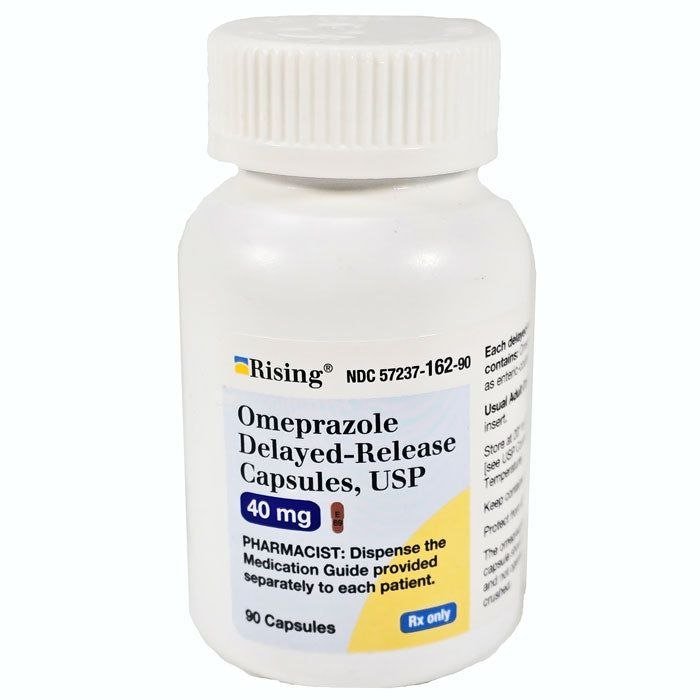
Omeprazole 40mg is a licensed generic and proprietary oral pharmaceutical preparation (originally developed and commercialized under the innovator brand Losec). Chemically designated as $(RS)\text{-5-methoxy-2-[[(4-methoxy-3,5-dimethylpyridin-2-yl)methyl]sulfinyl]-1H-benzimidazole}$, omeprazole is the prototypical member of the substituted benzimidazole class of antisecretory agents. Structurally, the molecule comprises a substituted pyridine ring linked via a chiral methylsulfinyl bridge to a substituted benzimidazole nucleus. It is a racemic mixture of two active enantiomers ($S\text{-omeprazole}$ [esomeprazole] and $R\text{-omeprazole}$). Its empirical molecular formula is $\text{C}_{17}\text{H}_{19}\text{N}_3\text{O}_3\text{S}$, with an average molecular weight of $345.42\text{ g/mol}$.
Because intact omeprazole is an acid-labile weak base that rapidly degrades in low pH environments, solid oral dosage forms must be formulated to resist premature degradation by gastric acid. Standard UK presentations of Omeprazole 40mg include:
Gastro-Resistant Capsules: Hard gelatin capsules containing enteric-coated granules or pellets designed to pass intact through the stomach and release the active drug in the neutral-to-alkaline milieu of the proximal duodenum.
Gastro-Resistant Tablets / Multiple Unit Pellet System (MUPS): Compressed tablets composed of thousands of individually enteric-coated micro-pellets that disperse uniformly within the stomach without losing acid-resistant integrity if suspended in water.
Pharmaceutical excipients commonly incorporated include sugar spheres (sucrose and maize starch), hypromellose, talc, methacrylic acid-ethyl acrylate copolymer, titanium dioxide (E171), disodium phosphate, and approved iron oxide colorants.
Within the United Kingdom regulatory framework:
Medicinal Classification: While low-dose formulations ($10\text{ to }20\text{ mg}$) are available over the counter as Pharmacy (P) or General Sales List (GSL) medicines for short-term heartburn relief, Omeprazole 40mg is strictly categorized as a Prescription Only Medicine (POM) governed by the Human Medicines Regulations 2012. It is catalogued in the British National Formulary (BNF) and listed on the NHS Drug Tariff, making it reimbursable via standard NHS primary care prescription forms (FP10).
Controlled Drug Status: Omeprazole is not a controlled substance under the Misuse of Drugs Act 1971 or the Misuse of Drugs Regulations 2001.
While omeprazole possesses no intrinsic recreational abuse liability or central nervous system dependence potential, its widespread primary care utilization presents recognized clinical challenges. These include chronic inappropriate prescribing without documented indications, abrupt cessation-induced rebound acid hypersecretion, and unmonitored use acquired via online pharmacies to mask the warning symptoms of underlying upper gastrointestinal malignancy.
The pharmacodynamic profile of omeprazole is characterized by targeted, covalent inhibition of the terminal pathway of gastric acid production, acting as a prodrug activated selectively within the secretory canaliculi of parietal cells:
Parietal Cell Accumulation and Proton-Driven Activation: Following systemic absorption and delivery via the arterial microcirculation, omeprazole (a lipophilic weak base with a $\text{p}K_a$ of $\sim 4.0$) diffuses passively across the basolateral membrane of gastric parietal cells into their highly acidic secretory canaliculi ($\text{pH} < 1.0\text{ to }2.0$). In this acidic microenvironment, omeprazole becomes rapidly protonated. Protonation traps the ionized molecule within the canaliculus (ion trapping), achieving local drug concentrations up to 1,000 times higher than in circulating plasma.
Conversion to Active Tetracyclic Sulfenamide: The trapped protonated molecule undergoes a spontaneous, acid-catalyzed rearrangement, transforming into its active form: a planar, positively charged tetracyclic sulfenamide intermediate.
Irreversible Covalent Inhibition of $\text{H}^+/\text{K}^+\text{-ATPase}$: The active sulfenamide reacts rapidly with accessible, functionally critical luminally oriented cysteine residues (principally Cys813, and to a lesser extent Cys892) on the catalytic $\alpha$-subunit of the gastric proton pump ($\text{H}^+/\text{K}^+\text{-ATPase}$). This forms an irreversible, covalent disulfide bond ($\text{-S-S-}$), completely inactivating the enzyme.
Terminal Acid Pathway Blockade: Because the gastric $\text{H}^+/\text{K}^+\text{-ATPase}$ represents the final common biochemical step of acid generation, irreversible inhibition by omeprazole suppresses both basal (fasting) and stimulated gastric acid secretion, regardless of the upstream physiological secretagogue (histamine via $H_2$ receptors, acetylcholine via $M_3$ receptors, or gastrin via $CCK_2$ receptors).
Restoration of Secretory Function: Because the covalent enzyme blockade is irreversible, restoration of gastric acid secretion does not depend on the systemic clearance of circulating drug, but requires de novo synthesis and insertion of new $\text{H}^+/\text{K}^+\text{-ATPase}$ pump molecules into the canalicular membrane (enzyme turnover half-life: approximately 24 to 54 hours). Consequently, a single dose produces prolonged antisecretory activity extending far beyond its brief plasma half-life.
Secondary Endocrine Adaptations (Hypergastrinaemia): Sustained reduction of intra-gastric acidity blunts negative feedback inhibition on antral G-cells, causing compensatory, physiological elevations in circulating serum gastrin. Prolonged hypergastrinaemia induces reversible hyperplasia of gastric enterochromaffin-like (ECL) cells.
Omeprazole 40mg represents a high-dose therapeutic intervention indicated primarily for severe, erosive, or refractory acid-peptic disorders under BNF and National Institute for Health and Care Excellence (NICE) guidelines:
Severe Refractory Gastro-Oesophageal Reflux Disease (GORD):
Indicated for the healing of severe erosive esophagitis (Los Angeles Classification Grades C and D) and management of refractory GORD symptoms unresponsive to standard $20\text{ mg}$ once-daily dosing.
Standard Dosing: $40\text{ mg}$ once daily for 4 to 8 weeks.
Severe / Refractory Peptic Ulcer Disease (PUD):
Treatment of active, severe, or recurrent gastric ulcers ($40\text{ mg}$ once daily for 4 to 8 weeks) and duodenal ulcers refractory to $20\text{ mg}$ regimens ($40\text{ mg}$ once daily for 4 weeks).
Eradication of Helicobacter pylori (Triple Therapy):
In combination with appropriate antibacterial regimens for the eradication of H. pylori in peptic ulcer disease, in accordance with NICE Guideline CG184 (Gastro-oesophageal reflux disease and dyspepsia in adults):
Standard UK Regimen: Omeprazol $20\text{ to }40\text{ mg}$ twice daily co-prescribed with amoxicillin $1\text{ g}$ BD and either clarithromycin $500\text{ mg}$ BD or metronidazole $400\text{ mg}$ BD for 7 days.
Zollinger-Ellison Syndrome (Gastrinoma):
Long-term treatment of pathological gastric acid hypersecretion. The initial starting dose is typically $60\text{ mg}$ una vez al día, with maintenance regimens commonly adjusted between $40\text{ mg}$ y $120\text{ mg}$ daily (doses $>80\text{ mg/day}$ should be divided into two daily administrations).
Prevention and Treatment of NSAID-Associated Peptic Ulceration:
Healing of NSAID-associated gastric or duodenal ulcers in patients requiring continued non-steroidal anti-inflammatory drug therapy ($20\text{ to }40\text{ mg}$ once daily for 4 to 8 weeks).
Prevention of Re-bleeding Following Therapeutic Endoscopy for Peptic Ulcer:
High-dose oral step-down therapy following initial IV proton pump inhibitor infusion ($40\text{ mg}$ twice daily for up to 14 days, stepping down to standard maintenance).
NICE CG184 explicitly advises that high-dose proton pump inhibitors (such as Omeprazole 40mg) should be restricted to acute healing phases. Following clinical resolution (typically 4 to 8 weeks), patients should be stepped down to the lowest effective maintenance dose (e.g., $10\text{ to }20\text{ mg}$ daily) or trialed on “as-needed” (PRN) therapy to mitigate the risks associated with long-term profound hypochlorhydria.
The pharmacokinetic disposition of omeprazole is defined by enteric absorption, rapid hepatic clearance, and profound CYP2C19 pharmacogenetic polymorphism dependencies:
Absorption: Following gastric emptying, the enteric-coated formulation releases omeprazole in the duodenum, where it is absorbed rapidly across the intestinal mucosa. Peak plasma concentrations ($C_{max}$) are attained within 1 to 3 hours (median $T_{max} \approx 1.5\text{ to }2\text{ hours}$). Absolute oral bioavailability after a single dose is approximately $30\text{ to }40\%$ due to first-pass hepatic extraction. However, with repeated once-daily dosing, systemic bioavailability progressively increases to approximately $60\text{ to }65\%$; this self-enhancement occurs because omeprazole suppresses its own hepatic first-pass metabolism via auto-inhibition of CYP2C19. Ingestion alongside food delays gastric emptying and slows absorption rate, although overall bioavailability is not significantly blunted; nonetheless, administration 30 to 60 minutes before breakfast is clinically mandated to coincide peak circulating drug levels with the postprandial insertion of active proton pumps.
Distribution: Omeprazole is moderately lipophilic ($\text{LogP} \approx 2.2$) with an apparent volume of distribution ($V_d$) of approximately $0.3\text{ L/kg}$, reflecting distribution predominantly within extracellular fluids. In circulating human plasma, it is extensively bound to serum proteins ($\sim 95\%$ bound), primarily human serum albumin and $\alpha_1$-acid glycoprotein.
Biotransformation (The CYP2C19 / CYP3A4 Axis): Systemic clearance is mediated almost entirely by hepatic microsomal oxidation via cytochrome P450 isoenzymes:
Hydroxylation and Demethylation (CYP2C19, $\sim 80\%$): The primary metabolic pathway is catalyzed by cytochrome P450 2C19, converting omeprazole into its primary circulating, inactive metabolites: $5\text{-hydroxyomeprazole}$ y $5\text{-O-desmethylomeprazole}$.
Sulfoxidation (CYP3A4, $\sim 20\%$): A secondary pathway mediated by cytochrome P450 3A4 converts omeprazole to omeprazole sulfone.
None of these circulating systemic metabolites possess significant antisecretory activity.
The CYP2C19 Pharmacogenetic Trap:
Extensive / Ultra-Rapid Metabolisers (CYP2C19*17): Exhibit accelerated enzymatic clearance, resulting in lower circulating drug exposure ($AUC$), shorter terminal half-lives, and blunted clinical acid suppression, occasionally requiring dose escalation to $40\text{ mg}$ BD for clinical healing.
Poor Metabolisers (PMs; carrying inactive alleles such as *2 and *3; present in $\sim 2\text{ to }5\%$ of Caucasians and up to $15\text{ to }20\%$ of East Asians): Possess virtually zero functional CYP2C19 activity. In PMs, omeprazole clearance shifts entirely to secondary CYP3A4, resulting in a 3- to 5-fold increase in plasma $AUC$ and prolonged drug exposure.
Elimination: Systemic elimination is predominantly renal. Approximately $80\%$ of an administered dose is excreted in the urine as polar, inactive Phase I and conjugated Phase II metabolites within 48 hours. The remaining $20\%$ is excreted in the faeces via biliary clearance. Negligible unchanged parent drug is cleared in urine.
The terminal elimination plasma half-life ($t_{1/2}$) of omeprazole is short, averaging $0.5\text{ to }1.2\text{ hours}$ (extending to $2\text{ to }3\text{ hours}$ in CYP2C19 poor metabolisers or patients with severe hepatic cirrhosis).
Despite this short plasma half-life, the pharmacodynamic duration of acid suppression spans 24 to 72 hours due to the irreversible covalent binding to the $\text{H}^+/\text{K}^+\text{-ATPase}$ enzyme.
The primary physiological effect in clinical practice is a rapid, profound increase in intra-gastric pH (typically sustaining a daytime $\text{pH} > 4.0$ for over 16 to 18 hours at $40\text{ mg/day}$). While short-term therapy is generally well tolerated, high-dose and long-term administration generates an extensive spectrum of multi-system adverse effects:
Common Short-Term Adverse Reactions (Common, $\ge 1/100$ to $<1/10$):
Gastrointestinal Disturbances: Diarrhea, constipation, flatulence, abdominal pain, nausea, and vomiting.
Central Nervous System: Headache (most frequently reported single side effect), dizziness, and transient vertigo.
Infectious Complications (Profound Hypochlorhydria Hazards):
$Clostridioides\text{ difficile}$ InfectionOmeprazole 40mg is a high-dose proton pump inhibitor (PPI) that significantly reduces stomach acid production by deactivating the $\text{H}^+/\text{K}^+$-ATPase pump in gastric parietal cells. At 40mg (prescription strength), it is typically prescribed for conditions requiring aggressive acid suppression rather than mild, occasional heartburn.
Usos principales
Severe Gastroesophageal Reflux Disease (GERD): Healing erosive esophagitis and managing non-responsive reflux symptoms.
Gastric & Duodenal Ulcers: Promoting active ulcer healing or preventing ulcer recurrence during prolonged NSAID therapy.
Zollinger-Ellison Syndrome: Managing severe acid hypersecretion (often requiring 40mg or higher daily).
H. pylori Eradication: Used twice daily as part of triple therapy alongside antibiotics (typically clarithromycin and amoxicillin).
How to Take It
Timing: Take once daily in the morning, 30 to 60 minutes before a meal (acid pumps need to be active for the medication to bind effectively).
Administration: Swallow capsules or tablets whole with water. Do not crush, chew, or open delayed-release formulations, as gastric acid degrades unprotected omeprazole.
Side Effects & Safety Considerations
Common: Headache, abdominal pain, diarrhea, nausea, gas, or mild dizziness.
Long-Term Risks (>1 year use): Decreased absorption of vitamin B12, magnesium, and calcium (increasing bone fracture risk); elevated risk of Clostridioides difficile bacterial infection.
Drug Interactions: Omeprazole inhibits CYP2C19, which can decrease the antiplatelet activation of clopidogrel (Plavix) and alter levels of diazepam, phenytoin, or methotrexate.
Always follow the specific dosing interval directed by your prescriber. Do not abruptly discontinue prolonged therapy without medical guidance, as rebound acid hypersecretion can occur.
| Cantidad | 30, 50, 100 |
|---|


 English English
  German
 Italian
 Dutch
Dutch
 Spanish