- Tu carrito está vacío
- Continuar comprando



Rango de precios: £ 17.76 por £ 459.54
Meta Description:
Critical UK clinical monograph on Lovegra (sildenafil citrate 100 mg for women) detailing PDE5 inhibition, female genital hemodynamics, cardiovascular risks, and unlicensed regulatory status.
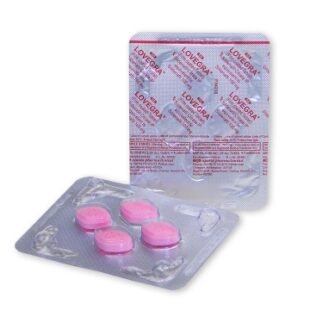
Lovegra (colloquially designated in consumer and digital grey-market commerce as “Female Viagra” or “Pink Viagra”) is an oral solid dosage pharmaceutical formulation containing the synthetic phosphodiesterase type 5 (PDE5) inhibitor sildenafil citrate. Chemically, sildenafil citrate is designated as $1\text{-[[3-(6,7-dihydro-1-methyl-7-oxo-3-propyl-1H-pyrazolo[4,3-d]pyrimidin-5-yl)-4-ethoxyphenyl]sulfonyl]-4-methylpiperazine citrate}$, possessing an empirical molecular formula of $\text{C}_{22}\text{H}_{30}\text{N}_{6}\text{O}_{4}\text{S}\cdot\text{C}_{6}\text{H}_{8}\text{O}_{7}$ and a molecular weight of $666.7\text{ g/mol}$. Structurally, the core molecule incorporates a pyrazolopyrimidinone bicyclic ring system that acts as an analogue of cyclic guanosine monophosphate (cGMP), coupled to an ethoxyphenyl ring and an N-methylpiperazine sulfonyl moiety. Commercial Lovegra preparations—primarily manufactured overseas by entities such as Ajanta Pharma—present as distinctive pink, diamond-shaped, film-coated tablets delivering $100\text{ mg}$ of sildenafil base (equivalent to $140.48\text{ mg}$ of sildenafil citrate) formulated with tableting excipients including microcrystalline cellulose, anhydrous dibasic calcium phosphate, croscarmellose sodium, magnesium stearate, and hypromellose-based pink dye film-coatings.
Within the United Kingdom regulatory framework, Lovegra possesses no marketing authorisation (MA) from the Medicines and Healthcare products Regulatory Agency (MHRA). While sildenafil citrate is widely licensed across the UK as a Prescription Only Medicine (POM) for male erectile dysfunction (e.g., Viagra) and pulmonary arterial hypertension (e.g., Revatio), as well as a reclassified Pharmacy (P) medicine for adult males under strict criteria (e.g., Viagra Connect, $50\text{ mg}$), no formulation of sildenafil is licensed by the MHRA for female sexual dysfunction or administration in women. Lovegra is not catalogued in the British National Formulary (BNF) as a recognized UK medicinal brand. Online marketing asserting that Lovegra holds “over-the-counter Pharmacy (P) medicine status for women” is factually incorrect and misrepresents domestic regulatory licensing frameworks. Unlicensed parallel imports and grey-market internet supplies present recognized clinical risks regarding non-standardized supply chains, counterfeit active pharmaceutical ingredient (API) variance, and the absence of domestic pharmacovigilance oversight.
The pharmacodynamic profile of Lovegra in female anatomy is mediated by selective competitive inhibition of phosphodiesterase type 5, altering clitoral, labial, and vaginal vascular smooth muscle tone:
Targeted Phosphodiesterase Type 5 (PDE5) Inhibition: Sildenafil is a potent, reversible, and highly selective inhibitor of the cGMP-specific PDE5 enzyme ($IC_{50} \approx 3.5\text{ to }5\text{ nM}$). PDE5 is abundantly expressed within vascular smooth muscle throughout systemic vascular beds, including the internal pudendal arterial branches supplying the clitoral corpora cavernosa, labia minora, and the peri-vaginal erectile network.
Nitric Oxide (NO) / cGMP Signalling Amplification: In response to direct peripheral sensory or central psychosexual stimulation, non-adrenergic, non-cholinergic (NANC) autonomic nerve terminals and endothelial cells in the pelvic vasculature release nitric oxide (NO). NO diffuses into adjacent vascular smooth muscle cells and activates soluble guanylyl cyclase (sGC), which converts guanosine triphosphate (GTP) into cyclic guanosine monophosphate (cGMP). cGMP activates protein kinase G (PKG), promoting intracellular calcium extrusion and dephosphorylating myosin light chains. Under uninhibited physiology, PDE5 rapidly degrades cGMP into inactive 5′-GMP. By selectively blocking PDE5, sildenafil prevents cGMP breakdown, prolonging and amplifying vasodilation.
Female Genital Haemodynamic Adaptations: The amplification of cGMP elevates clitoral cavernosal arterial inflow and increases intracavernous pressure, promoting clitoral engorgement, increased clitoral length and tumescence, and labial swelling. Concurrently, increased microvascular perfusion across the vaginal wall elevates transudation of interstitial plasma across the non-keratinized stratified squamous vaginal epithelium, augmenting genuine physiological lubrication during sexual arousal.
Independence from Central Libido or Neurotransmitter Pathways: Crucially, sildenafil exerts no direct action on the central neurochemical drivers of female sexual desire, hedonic reward, or emotional intimacy. Unlike centrally acting agents licensed in other international jurisdictions for Hypoactive Sexual Desire Disorder (HSDD)—such as flibanserin (a $5\text{-HT}_{1\text{A}}$ agonist / $5\text{-HT}_{2\text{A}}$ antagonist) or bremelanotide (a melanocortin receptor agonist)—sildenafil acts exclusively on peripheral vascular and smooth muscle targets. It cannot trigger spontaneous sexual arousal in the absence of tactile or psychological stimulation.
Lovegra possesses no approved clinical indications in the United Kingdom. No randomized, double-blind, multicentre Phase I–III clinical trials conforming to MHRA statutory criteria have established an acceptable benefit-risk profile or authorized Lovegra for clinical prescription.
The National Institute for Health and Care Excellence (NICE) does not endorse, recommend, or integrate Lovegra or sildenafil into any clinical management pathway for female sexual dysfunction. It is absent from clinical guidelines governing menopause: diagnosis and management (NG23), where genitourinary symptoms of menopause (GSM / vulvovaginal atrophy) are managed with licensed vaginal oestrogens, systemic hormone replacement therapy (HRT), or non-hormonal lubricants, and low hypoactive desire is managed, where appropriate, with specialist-initiated off-label transdermal testosterone. Large-scale clinical trials investigating sildenafil for broad female sexual arousal disorder (FSAD) historically failed to demonstrate statistically significant, reproducible clinical efficacy over placebo in heterogeneous female cohorts, largely because female sexual dysfunction is multifactorial (intertwining neuroendocrine, hormonal, psychological, and relational components rather than isolated vasculogenic failure).
The practical application of Lovegra is confined to unregulated, off-label consumer self-administration and private grey-market procurement. In these non-authorized settings, it is sought for:
Self-directed attempts to treat persistent physiological arousal difficulties or diminished genital sensation.
Counteracting antidepressant-induced sexual dysfunction (specifically female orgasmic delay and arousal blunting secondary to selective serotonin reuptake inhibitors [SSRIs]).
Augmentation of clitoral sensitivity and coital lubrication during private intimacy.
Lovegra holds no status within the NHS drug tariff, cannot be prescribed on NHS prescription forms (FP10), and must never be supplied under the guise of an over-the-counter Pharmacy (P) medicine.
Because Lovegra is formulated as an oral solid tablet, its pharmacokinetic profile mirrors the established clinical pharmacology of generic sildenafil citrate:
Absorption: Sildenafil is absorbed rapidly from the gastrointestinal tract following oral administration. In a fasted state, maximum observed plasma concentrations ($C_{max}$) are achieved with a median $T_{max}$ ranging between 30 and 120 minutes (mean approximately 60 minutes). Absolute oral bioavailability is low to moderate, averaging approximately $41\%$ (ranging from $25\text{ to }63\%$), owing to extensive presystemic first-pass hepatic and intestinal metabolism. Co-administration alongside high-fat meals markedly delays absorption, reducing the rate of absorption ($C_{max}$ decreases by an average of $29\%$ y $T_{max}$ is prolonged by approximately 60 minutes).
Distribution: Sildenafil and its primary circulating metabolite distribute widely into systemic tissues, exhibiting a mean steady-state volume of distribution ($V_{ss}$) of approximately $105\text{ L}$. Sildenafil and its primary active metabolite are highly bound to circulating plasma proteins (approximately $96\%$), primarily human serum albumin. Protein binding is concentration-independent across therapeutic ranges.
Biotransformation: Sildenafil is cleared primarily via hepatic microsomal metabolism, mediated predominantly by the cytochrome P450 3A4 (CYP3A4) isoenzyme (major pathway), with a secondary contribution from the CYP2C9 isoenzyme. The primary circulating metabolite is formed via N-demethylation of the piperazine ring, yielding $N\text{-desmethylsildenafil}$. This active metabolite exhibits a PDE selectivity profile identical to the parent compound, with an in vitro potency for PDE5 of approximately $50\%$ relative to parent sildenafil. $N\text{-desmethylsildenafil}$ accounts for approximately $20\%$ of the total pharmacological effect in systemic circulation.
Elimination: Following oral administration, sildenafil is eliminated primarily as inactive and active metabolites in the faeces via biliary excretion (accounting for approximately $80\%$ of the administered oral dose), with approximately $13\%$ excreted via renal glomerular filtration in the urine. The terminal elimination half-life ($t_{1/2}$) of both parent sildenafil and the active $N\text{-desmethyl}$ metabolite is approximately 3 to 5 hours. Clearance is reduced in individuals with severe hepatic impairment or severe renal insufficiency ($\text{CrCl} < 30\text{ mL/min}$), significantly elevating systemic exposure.
The primary physiological effect observed following oral ingestion is a reduction in systemic peripheral vascular resistance accompanied by increased pelvic and genital blood flow. Because PDE5 is distributed across pulmonary and systemic vascular beds, and because sildenafil exhibits cross-reactivity with other phosphodiesterase isoenzymes (notably PDE6 in the retina and PDE1/PDE11 in systemic tissues), administration generates a wide spectrum of multi-system adverse effects:
Very Common ($\ge 1/10$):
Cephalalgia (headache; occurring in up to $16\text{ to }20\%$ of users due to cranial vasodilation).
Facial flushing and subjective peripheral erythema/warmth (secondary to cutaneous arteriolar dilation).
Common ($1/100$ to $<1/10$):
Dyspepsia and gastro-oesophageal reflux (relaxation of the lower oesophageal sphincter smooth muscle via elevated cGMP).
Nasal congestion and epistaxis (vasodilation of the nasal mucosal venous sinusoidal network).
Dizziness, lightheadedness, and postural orthostatic hypotension.
Chromotopsia and visual disturbances: transient blue-tinted vision (cyanopsia), heightened photophobia, or blurred vision, provoked by weak, off-target inhibition of retinal phosphodiesterase type 6 (PDE6), which mediates phototransduction in rod and cone photoreceptors.
Uncommon ($1/1,000$ to $<1/100$):
Sinus tachycardia, palpitations, and peripheral oedema.
Nausea, vomiting, abdominal distension, and dry mouth.
Myalgia, back pain, and extremity discomfort.
Rare and Potentially Life-Threatening Hazards ($<1/1,000$):
Severe, Uncontrolled Hypotension and Cardiovascular Collapse: A drop in mean arterial pressure; fatal cardiogenic or hypovolaemic collapse can occur if co-administered with organic nitrates or nitric oxide donors.
Non-Arteritic Anterior Ischaemic Optic Neuropathy (NAION): Sudden, painless, permanent loss of vision in one or both eyes secondary to hypoperfusion of the optic nerve head.
Sudden Sensorineural Hearing Loss: Acute, unilateral or bilateral reductions in auditory acuity, often accompanied by tinnitus and vertigo.
Female Pelvic Congestion / Genital Pain: Unregulated high doses ($100\text{ mg}$) can cause excessive, painful clitoral engorgement, localized vulvar throbbing, and pelvic ache refractory to relief.
Unregulated Product Sourcing Hazards: Products procured from unregulated grey-market vendors frequently fail quality-control testing, posing documented risks of containing incorrect sildenafil quantities (sub- or supratherapeutic), toxic coloring pigments, or adulteration with unlisted active compounds.
Given its profound vascular actions, rapid vasodilatory potential, and non-approved status for female indications, Lovegra requires strict adherence to pharmacological contraindications and harm-minimisation standards:
Contraindications:
Concurrent Nitrate Therapy: Absolute contraindication; concurrent administration of organic nitrates in any form (e.g., glyceryl trinitrate [GTN], isosorbide mononitrate, isosorbide dinitrate) or recreational nitric oxide donors (“poppers” / alkyl nitrites). The synergistic activation of the NO/cGMP pathway triggers catastrophic, refractory systemic hypotension, coronary hypoperfusion, and fatal cardiovascular collapse.
Concurrent Guanylate Cyclase Stimulators: Absolute contraindication with riociguat due to severe additive hypotension.
Severe Cardiovascular Instability: Absolute contraindication in patients with recent myocardial infarction (within the past 6 months), recent stroke or transient ischaemic attack (TIA), resting hypotension ($<90/50\text{ mmHg}$), severe unstable angina, severe aortic stenosis, or severe heart failure (NYHA Class III–IV).
Ocular Pathologies: Absolute contraindication in patients with a prior history of non-arteritic anterior ischaemic optic neuropathy (NAION) or known hereditary degenerative retinal disorders (such as retinitis pigmentosa, which involves genetic phosphodiesterase defects).
Severe Hepatic or End-Stage Renal Impairment: Absolute contraindication in baseline hepatic cirrhosis (Child-Pugh Class C) or patients requiring renal dialysis.
Pregnancy and Lactation: Absolute contraindication for sexual enhancement indications. While sildenafil has undergone specialist clinical research for obstetric conditions such as severe fetal growth restriction and pre-eclampsia, recreational or unregulated self-administration during gestation or breastfeeding is completely unsafe.
Paediatric Population: Contraindicated in individuals under 18 years of age.
Drug Interactions:
Strong Cytochrome P450 3A4 Inhibitors (e.g., Ketoconazole, Itraconazole, Ritonavir, Clarithromycin, Erythromycin): Concomitant administration drastically inhibits sildenafil hepatic clearance, multiplying systemic area under the curve ($AUC$) by over $200\text{ to }1,000\%$, predisposing patients to severe toxicity.
CYP3A4 Inducers (e.g., Rifampicin, Carbamazepine, Phenytoin, St John’s Wort): Significantly accelerates clearance, rendering sildenafil clinically ineffective.
Alpha-Adrenoreceptor Blockers (e.g., Doxazosin, Tamsulosin, Prazosin): Co-administration causes additive peripheral vasodilation, precipitating symptomatic orthostatic hypotension, syncope, and dizziness.
Antihypertensive Multi-Therapy: Additive reductions in blood pressure; patients on complex antihypertensive regimens require extreme caution.
Alcohol Ingestion: Concomitant ethanol consumption compounds systemic vasodilation, increasing the incidence of hypotension, reflex tachycardia, dizziness, and headache.
Clinical Precautions and Harm Minimisation:
Critical Alarm Symptoms (“Red Flags”): Individuals presenting with sudden unilateral visual loss, acute hearing impairment, retrosternal crushing chest pain, dyspnoea, or syncope following ingestion require immediate emergency (999/A&E) transfer.
Clinical Assessment of Female Sexual Dysfunction: Healthcare professionals encountering women inquiring about or consuming Lovegra should perform a comprehensive, empathetic clinical evaluation. Female sexual difficulties mandate screening for:
Genitourinary Syndrome of Menopause (GSM) and vulvovaginal atrophy (managed safely with licensed local vaginal oestrogen preparations).
Endocrine disturbances: serum thyroid-stimulating hormone (TSH), prolactin, and total/free testosterone.
Pharmacological iatrogenesis: review of concurrent antidepressants (SSRIs/SNRIs), oral contraceptives, or antihypertensive therapies.
Psychological and relational etiologies: referral to psychosexual counseling or specialist NHS sexual and reproductive health services.
Sourcing and Dosing Counseling: Clinicians must directly warn patients against purchasing unregulated pink sildenafil tablets online. If an adult female insists on trialing sildenafil for severe SSRI-induced sexual dysfunction under private clinical supervision, off-label prescribing should only be considered by a qualified specialist prescriber utilizing domestic, licensed pharmaceutical-grade generic sildenafil (initiating at $25\text{ mg}$, rather than a blunt $100\text{ mg}$ black-market dose) with fully informed consent regarding the lack of MHRA approval for females.
| 100mg | 4 pills, 8 pills, 12 pills, 20 pills, 30 pills + 2 pills, 60 + 4 pills, 90 + 6 pills, 120 + 8 pills, 180 + 8 pills, 240 + 12 pills, 360 + 12 pills |
|---|
 English English
  German
 Italian
 Dutch
Dutch
 Spanish


Reseñas
Todavía no hay reseñas.