- Il tuo carrello è vuoto
- Continua Lo Shopping


£ 214.60
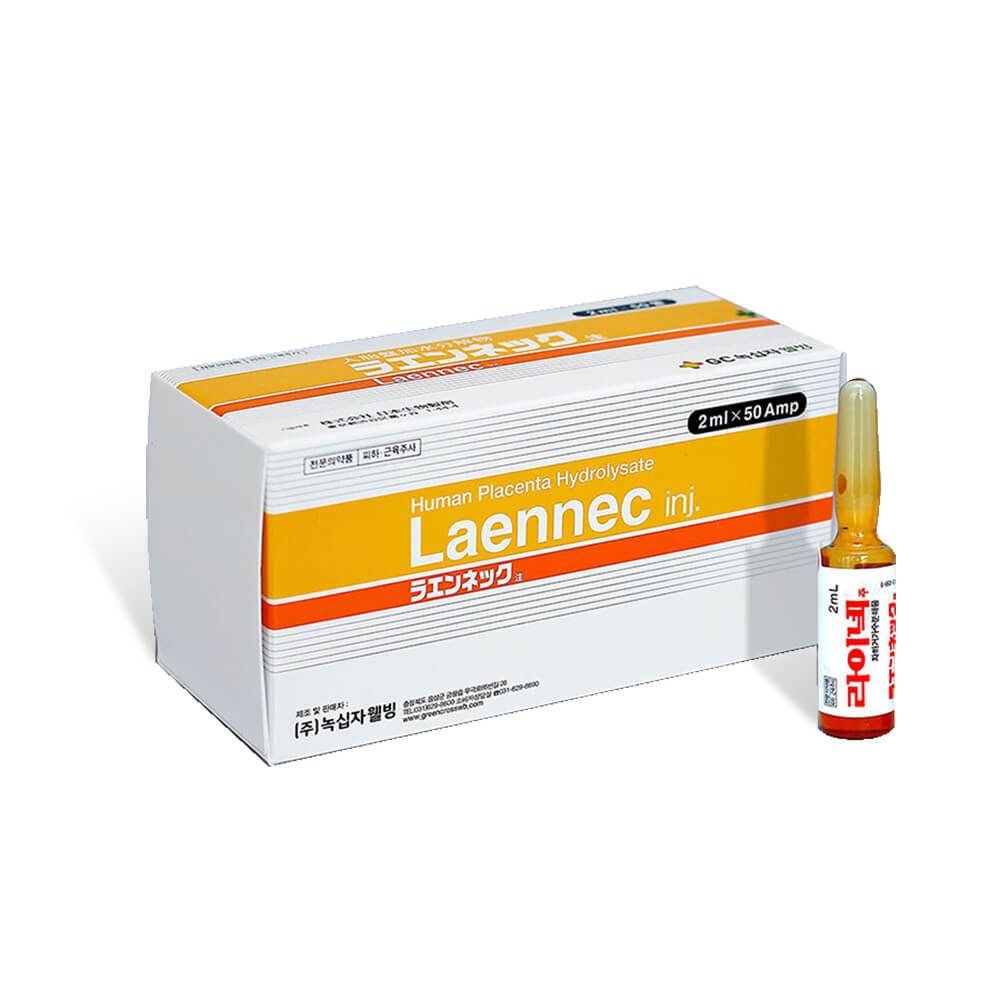
Laennec Injection is a sterile, human placenta-derived hydrolysate formulated as an injectable solution. Similar to other human placental extracts, it is utilized in clinical and aesthetic practice—predominantly in Asian and international markets—for the management of chronic liver dysfunction, menopausal disturbances, and general anti-aging cellular revitalization.
Active Composition: Aqueous hydrolysate extracted from healthy human placentas via proprietary multi-stage processing. Each 2 mL ampoule contains human placental extract solids alongside a rich matrix of amino acids, low-molecular-weight peptides, cytokines, growth factors, vitamins, nucleic acids, and minerals.
Therapeutic Class: Biogenic tissue stimulant / Hepatoprotective agent / Placental therapeutic.
Regulatory Status: Regulated as an ethical pharmaceutical drug in countries like Japan (where it has decades of approved clinical use) and South Korea. Administered strictly as a Prescription Only Medicine (POM).
Hepatocellular Regeneration: Stimulates liver cell proliferation and tissue repair, downregulating fibrogenesis and improving functional recovery in damaged hepatic parenchyma.
Anti-Inflammatory & Antifibrotic Activity: Suppresses pro-inflammatory cytokines and oxidative stress within hepatic and systemic tissues, protecting against lipid peroxidation and cellular apoptosis.
Biostimulation & Endocrine Regulation: Constituent growth factors (such as hepatocyte growth factor and nerve growth factor) and peptides modulate autonomic and endocrine axes, supporting systemic vitality and tissue rejuvenation.
Primary Indications:
Improvement of liver function in chronic chronic liver disease and hepatitis.
Alleviation of climacteric symptoms (menopausal disturbances) and chronic fatigue.
Dosing Regimen & Administration:
Typically administered via subcutaneous or intramuscular injection (and occasionally intravenously depending on localized clinical protocols).
Standard therapeutic regimens often involve a 2 mL dose administered 2 to 3 times weekly over an initial course, adjusted according to clinical and laboratory hepatotoxicity markers.
Systemic Absorption: Rapidly absorbed into systemic circulation following subcutaneous or intramuscular administration due to the low molecular weight of its hydrolyzed peptide components.
Distribution & Elimination: Bioactive peptides and amino acids distribute widely into target tissues (including hepatic tissue). Elimination occurs via standard endogenous protein catabolism and renal excretion.
Laennec alters hepatic metabolic capacity, modulates vascular tone, and enhances cellular turnover.
Common ( to ): Localized injection site reactions, including transient pain, tenderness, erythema, induration, or minor bruising.
Uncommon ( to ): Mild localized pruritus, transient low-grade fever, chills, headache, or general malaise post-injection.
Rare / Severe (<1/1,000): Hypersensitivity reactions, generalized urticaria, or anaphylaxis. While subjected to rigorous viral inactivation, thermal sterilization, and donor screening protocols, human biological products carry a theoretical risk of pathogen transmission.
Known hypersensitivity to human placental extracts or formulation excipients.
Pregnancy and lactation.
History of estrogen-dependent malignancies or active severe autoimmune disorders, where biogenic tissue stimulants might theoretically aggravate clinical pathology.
Blood Donation Restrictions: Administration of human placenta-derived injection products typically results in a permanent deferral from blood and organ donation in many national health jurisdictions (e.g., Japan, Canada, UK, and parts of Europe) as a precautionary measure against variant Creutzfeldt-Jakob disease (vCJD) and other untracked human pathogen transmissions.
Aseptic Technique: Must be administered by qualified medical professionals using strict aseptic injection protocols, rotating sites to minimize localized tissue induration.
Patient Counseling: Patients should be explicitly informed regarding permanent blood donation restrictions prior to initiating therapy.


 English English
  German
 Italian
 Dutch
Dutch
 Spanish