- Uw winkelwagen is leeg
- Verder Winkelen


Prijsklasse: £ 207.20 door £ 1,850.00
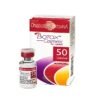
Botox (onabotulinumtoxinA) is a sterile, vacuum-dried purified neurotoxin complex produced from fermentation of Clostridium botulinum type A (Hall strain). Under the Anatomical Therapeutic Chemical (ATC) classification system, it is indexed under M03AX01 (other muscle relaxants, peripherally acting agents).
The active complex consists of a 150 kDa neurotoxin protein non-covalently associated with non-toxic hemagglutinin and non-hemagglutinin accessory proteins, forming a 900 kDa macromolecular complex. Formulated as a single-use vial containing 100 Allergan Units of vacuum-dried powder for solution for injection, it is reconstituted using sterile, unpreserved 0.9% Sodium Chloride. One Allergan Unit corresponds to the calculated median lethal intraperitoneal dose () in female mice under standard laboratory conditions. In the UK and EU, Botox is classified as a Prescription Only Medicine (POM) and must be administered strictly by trained healthcare professionals.
OnabotulinumtoxinA produces local chemo-denervation at the neuromuscular junction and autonomic cholinergic nerve terminals through a selective multi-step cellular mechanism:
High-Affinity Binding: The 100 kDa heavy chain of the neurotoxin binds selectively to dual cell-surface receptors (gangliosides and synaptic vesicle protein SV2) on presynaptic cholinergic nerve terminals.
Receptor-Mediated Endocytosis: The toxin-receptor complex is internalised into the presynaptic terminal via endocytic vesicles.
Translocation & Enzymatic Cleavage: Acidification of the endosome triggers a conformational change, translocating the 50 kDa catalytic light chain into the neuronal cytosol.
SNAP-25 Cleavage: The light chain acts as a zinc-dependent endopeptidase that site-specifically cleaves Synaptosomal-Associated Protein 25 (SNAP-25), a essential component of the SNARE protein complex.
Cleavage of SNAP-25 prevents the fusion of acetylcholine-containing vesicles with the presynaptic plasma membrane. This inhibits the quantal exocytosis of acetylcholine into the synaptic cleft, blocking neurotransmission. Clinical muscle relaxation or anhidrosis occurs within 24 to 72 hours, peaking at 1 to 2 weeks post-injection. Nerve function gradually recovers over 3 to 4 months as new axon collaterals sprout and form functional neuroglandular and neuromuscular junctions.
Licensing for Botox 100 Unit spans both aesthetic and medical indications:
Glabellar Lines: Moderate-to-severe vertical lines between the eyebrows seen at maximum frown in adults.
Crow’s Feet Lines: Moderate-to-severe lateral canthal lines seen at maximum smile.
Forehead Lines: Moderate-to-severe horizontal forehead lines seen at maximum eyebrow elevation.
Neurological & Pain Conditions: Prophylaxis of headaches in adults with chronic migraine ( days per month with headache, at least 8 of which are migraine); cervical dystonia (spasmodic torticollis); blepharospasm and hemifacial spasm.
Spasticity: Focal spasticity of the upper and lower limbs in adults and paediatric patients (aged 2 years and older).
Autonomic & Urological Disorders: Severe primary axillary hyperhidrosis refractory to topical antiperspirants; neurogenic detrusor overactivity (NDO) secondary to spinal cord injury or multiple sclerosis; idiopathic overactive bladder (OAB) unresponsive to anticholinergic therapy.
Non-Interchangeability Warning: Botulinum toxin units are specific to individual proprietary formulations and assay methods. Allergan Units of Botox are not interchangeable with other botulinum toxin preparations (e.g., Dysport, Xeomin, Myobloc).
Absorption & Distribution: Following intramuscular or intradermal injection, systemic exposure to intact toxin at recommended therapeutic doses is negligible. The toxin remains localized near the site of administration, bound tightly to cell surface SV2 receptors. Classical bioavailability, volume of distribution, and systemic pharmacokinetics cannot be measured in clinical human plasma samples.
Metabolism & Elimination: The protein complex degrades locally via endogenous proteolytic pathways into small peptide fragments and amino acids. Unbound systemic toxin undergoes clearance via renal excretion and hepatic metabolism. The elimination half-life of functional intracellular light-chain endopeptidase activity within the presynaptic nerve terminal is prolonged (spanning several weeks to months).
Botox causes local, reversible flaccid paralysis of targeted skeletal muscle groups or blockade of eccrine sweat gland secretion.
Aesthetic Applications:
Very Common (): Injection site erythema, oedema, pain, bruising.
Common ( to ): Ptosis (eyelid drooping), eyebrow ptosis, headache, facial asymmetry, dry eyes, skin tightness.
Therapeutic Applications:
Chronic Migraine: Neck pain, headache, facial paresis, eyelid ptosis, musculoskeletal stiffness.
Cervical Dystonia: Dysphagia, muscle weakness, neck pain, dry mouth.
Urological Indications: Urinary tract infection, dysuria, urinary retention, increased residual urine volume.
Hyperhidrosis: Non-axillary compensatory sweating, hot flushes, pain at injection site.
Rare / Serious (<1/1,000): Systemic toxin spread (botulism-like syndrome: progressive muscle weakness, dysphagia, dysarthria, respiratory compromise); anaphylaxis and severe hypersensitivity reactions.
Hypersensitivity to Clostridium botulinum toxin type A or any formulation excipients (human serum albumin, sodium chloride).
Presence of active infection at the intended injection site(s).
Acute urinary tract infection or acute urinary retention (for urological indications).
Aminoglycosides & Spectinomycin: Concomitant administration with aminoglycosides (e.g., gentamicin, amikacin) or spectinomycin potentiates the neuromuscular blockade of onabotulinumtoxinA, raising toxicity risk.
Neuromuscular Blockers & Muscle Relaxants: Peripheral muscle relaxants (e.g., tubocurarine, succinylcholine) may exhibit enhanced or prolonged paralytic actions when used concurrently.
Anticholinergic Agents: Combined use with systemic anticholinergic drugs can exacerbate systemic anticholinergic side effects (dry mouth, urinary retention, blurred vision).
Distant Spread of Toxin Effect: Patients and caregivers must be warned of the potential for distant toxin spread, causing dysphagia, diplopia, ptosis, generalized muscle weakness, or respiratory impairment. Immediate medical attention is required if swallowing or breathing difficulties develop.
Pre-existing Neuromuscular Disorders: Patients with myasthenia gravis, Eaton-Lambert syndrome, or amyotrophic lateral sclerosis (ALS) face an elevated risk of severe systemic effects, profound dysphagia, and respiratory compromise.
Anatomical Precautions: Injection near vulnerable structures (e.g., close to the levator palpebrae superioris) requires precise anatomical knowledge and minimal injection volumes to avoid unwanted diffusion and motor deficits.
| Fles | 1, 2, 5, 7, 10 |
|---|
 English English
  German
 Italian
 Dutch
Dutch
 Spanish