- Uw winkelwagen is leeg
- Verder Winkelen


£ 51.80
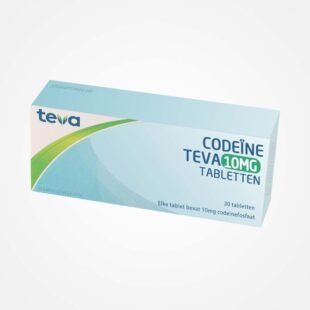
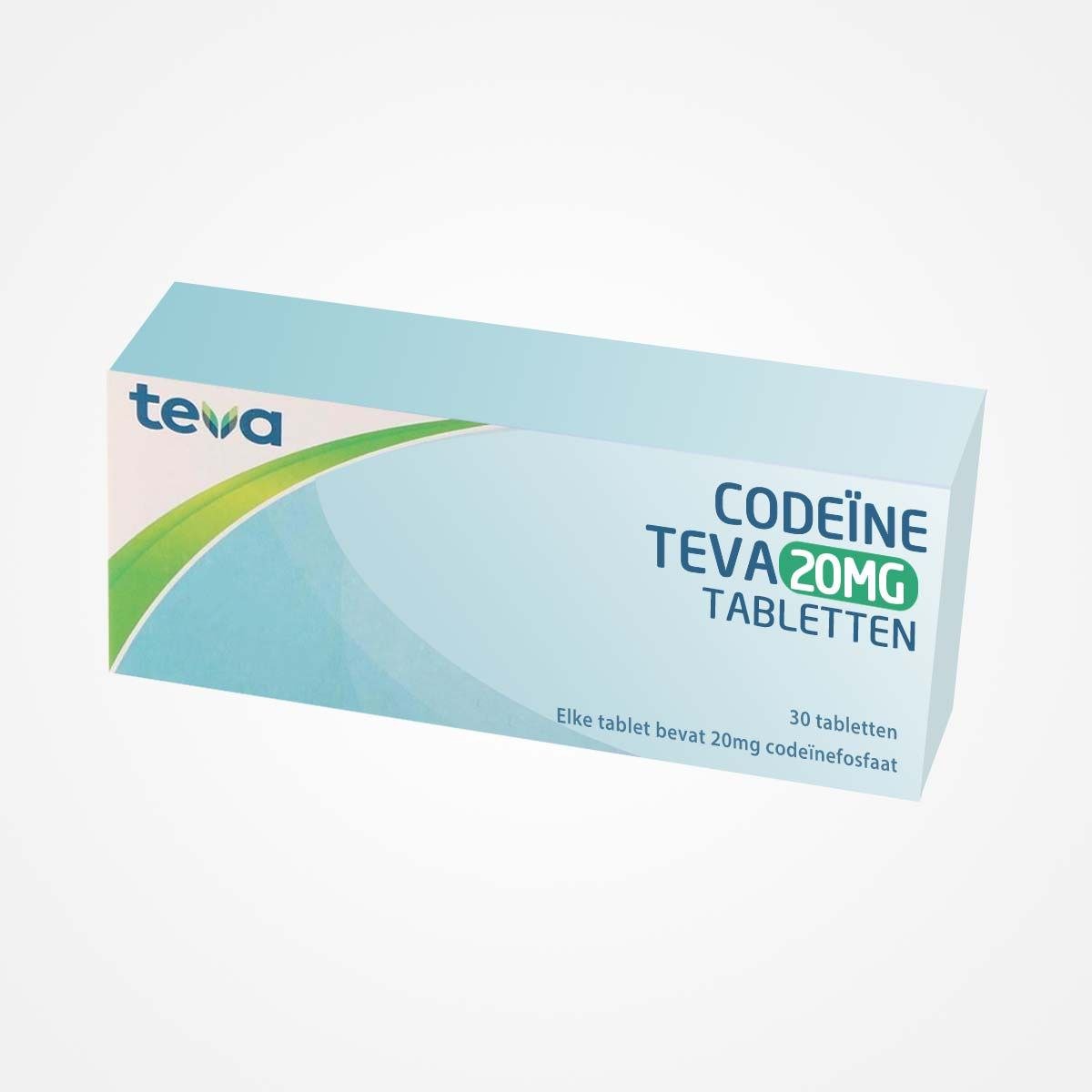
Codeine Teva 20 mg is a weak opioid analgesic and antitussive indicated for the relief of mild-to-moderate pain not controlled by non-opioid analgesics and for the symptomatic treatment of dry cough.
Codeine is a naturally occurring phenanthrene alkaloid obtained directly from the opium poppy (Papaver somniferum) or synthesized via the -methylation of morphine. Under the Anatomical Therapeutic Chemical (ATC) classification system, codeine is indexed under R05DA04 (cough suppressants) and N02AJ06 (analgesics in combination, when co-formulated).
Chemically designated as (5$\alpha$,6$\alpha$)-7,8-didehydro-4,5-epoxy-3-methoxy-17-methylmorphinan-6-ol phosphate hemihydrate, codeine phosphate is a water-soluble salt. In European and UK pharmaceutical practice, Codeine Teva 20 mg is presented as oral tablets containing 20 mg of codeine phosphate hemihydrate. Under the UK Human Medicines Regulations 2012, codeine at this strength is classified as a Prescription Only Medicine (POM) and controlled under Schedule 5 or Schedule 2 depending on preparation limits and single-entity presentation (typically Schedule 2 for single-entity oral preparations in the UK/EU).
Codeine acts as a prodrug with weak intrinsic affinity for opioid receptors. Its pharmacological efficacy is primarily mediated through its hepatic conversion to morphine, a potent full agonist at -opioid receptors.
Morphine binding to -opioid receptors (and to a lesser degree, – and -opioid subtypes) activates G-protein-coupled signaling pathways. This causes inhibition of adenylyl cyclase, reduced intracellular cAMP, suppression of presynaptic N-type voltage-gated calcium channels, and hyperpolarisation of postsynaptic neurons via inwardly rectifying potassium channels. These actions decrease neurotransmitter release (substance P, glutamate) in the dorsal horn of the spinal cord and alter perception of pain within the central nervous system.
At the medullary level, codeine exerts a direct suppressive effect on the cough center, producing antitussive actions at doses lower than those required for clinical analgesia.
Licensing for oral codeine phosphate 20 mg includes:
Mild-to-Moderate Pain: Treatment of acute, mild-to-moderate pain in patients aged 12 years and older where non-opioid analgesics (such as paracetamol or ibuprofen) alone are considered insufficient.
Symptomatic Relief of Non-Productive Cough: Management of distressing, dry, non-productive cough in adults (where licensed under local country-specific monographs).
Genotype and Age Considerations: Codeine is strictly contraindicated in paediatric patients under 12 years of age due to unpredictable risks of fatal respiratory depression. In patients aged 12 to 18 years, it is restricted solely to acute pain management when non-opioids fail and is contraindicated if compromised respiratory function is present (e.g., severe asthma, post-tonsillectomy/adenoidectomy).
NICE & BNF Guidance Context: Codeine is classified as a Step 2 “weak opioid” on the WHO pain ladder. Therapy should be restricted to the lowest effective dose for the shortest possible duration (typically days for acute pain) to minimise tolerance, physical dependence, and addiction.
Absorption: Codeine is rapidly absorbed from the gastrointestinal tract following oral administration, achieving peak plasma concentrations () within 1 to 2 hours. Oral bioavailability ranges between 40% and 70% due to first-pass metabolism.
Distribution: Codeine is widely distributed throughout body tissues, with an apparent volume of distribution () of approximately . Plasma protein binding is low (10% to 25%). It readily crosses the placental barrier and enters breast milk.
Biotransformation: Codeine is extensively metabolised in the liver via two main Phase I pathways:
O-demethylation (approx. 10%) via CYP2D6 to form morfine (the principal active metabolite).
N-demethylation (approx. 80%) via CYP3A4 to form norcodeine (weakly active).
Glucuronidation (Phase II) via UGT2B7 forms codeine-6-glucuronide.
CYP2D6 Polymorphism: The analgesic efficacy of codeine is heavily dependent on CYP2D6 phenotype:
Ultra-Rapid Metabolists: High CYP2D6 activity leads to rapid conversion and toxic plasma morphine levels, risking life-threatening respiratory depression even at standard therapeutic doses (20 mg).
Poor Metabolists: Lacking functional CYP2D6 enzymes, these individuals derive little to no analgesic benefit from codeine.
Elimination: Approximately 86% to 90% of the administered dose is excreted in urine within 24 hours (primarily as norcodeine, glucuronide conjugates, and free/conjugated morphine). The elimination half-life () of codeine ranges between 2.5 and 3.5 hours.
Codeine modulates central nociceptive signals, depresses medullary respiratory and cough centers, reduces gastrointestinal motility, and alters autonomic tone.
Very Common (): Constipation, somnolence, nausea.
Common ( to ): Dizziness, headache, lightheadedness, vomiting, dry mouth, abdominal cramps, hyperhidrosis, fatigue.
Uncommon ( to ): Dysphoria, euphoria, confusion, miosis, palpitations, orthostatic hypotension, pruritus, rash, urticaria, urinary retention or hesitation.
Rare ( to ): Severe respiratory depression, bronchospasm, biliary spasm, paralytic ileus, hallucinations, pancreatitis.
Frequency Unknown: Drug dependence, withdrawal syndrome, hyperalgesia, adrenal insufficiency.
Hypersensitivity to codeine, morphine, or formulation excipients.
Acute severe respiratory depression, obstructive airways disease, or acute asthma attacks.
Known CYP2D6 ultra-rapid metabolists.
Paediatric patients under 12 years of age.
Paediatric patients (12–18 years) undergoing tonsillectomy or adenoidectomy for obstructive sleep apnoea syndrome.
Breastfeeding women (morphine passes into breast milk, posing fatal respiratory risks to the infant).
Conditions with raised intracranial pressure or head injury (due to carbon dioxide retention worsening cerebral oedema).
CNS Depressants & Alcohol: Concomitant administration with alcohol, sedatives, hypnotics, general anaesthetics, phenothiazines, or other opioids produces severe additive central nervous system depression, profound hypotension, and respiratory arrest.
CYP2D6 Inhibitors: Co-administration with strong CYP2D6 inhibitors (e.g., fluoxetine, paroxetine, bupropion, quinidine) blocks codeine conversion to morphine, significantly diminishing analgesic efficacy.
CYP3A4 Inducers / Inhibitors: CYP3A4 inhibitors (e.g., ketoconazole, clarithromycin) direct more codeine down the CYP2D6 pathway, increasing morphine formation. CYP3A4 inducers (e.g., rifampicin, carbamazepine) decrease codeine plasma levels.
MAOIs: Use alongside monoamine oxidase inhibitors (MAOIs) or within 14 days of cessation may precipitate serotonin syndrome or severe CNS excitation/depression.
Dependence, Tolerance, and Abuse: Regular, prolonged use of codeine leads to physical and psychological dependence. Sudden cessation triggers an opioid withdrawal syndrome (restlessness, lacrimation, rhinorrhoea, sweating, muscle aches, diarrhoea). Tapering is recommended following sustained use.
Hepatic & Renal Impairment: Clearance of codeine and its metabolites is reduced in hepatic or renal impairment; lower initial doses and extended dosing intervals are required to prevent accumulation.
Driving and Operating Machinery: Codeine causes drowsiness, impaired reaction times, and visual disturbances. Patients must be advised not to drive if their ability is impaired.
 English English
  German
 Italian
 Dutch
Dutch
 Spanish