- Uw winkelwagen is leeg
- Verder Winkelen


£ 29.60
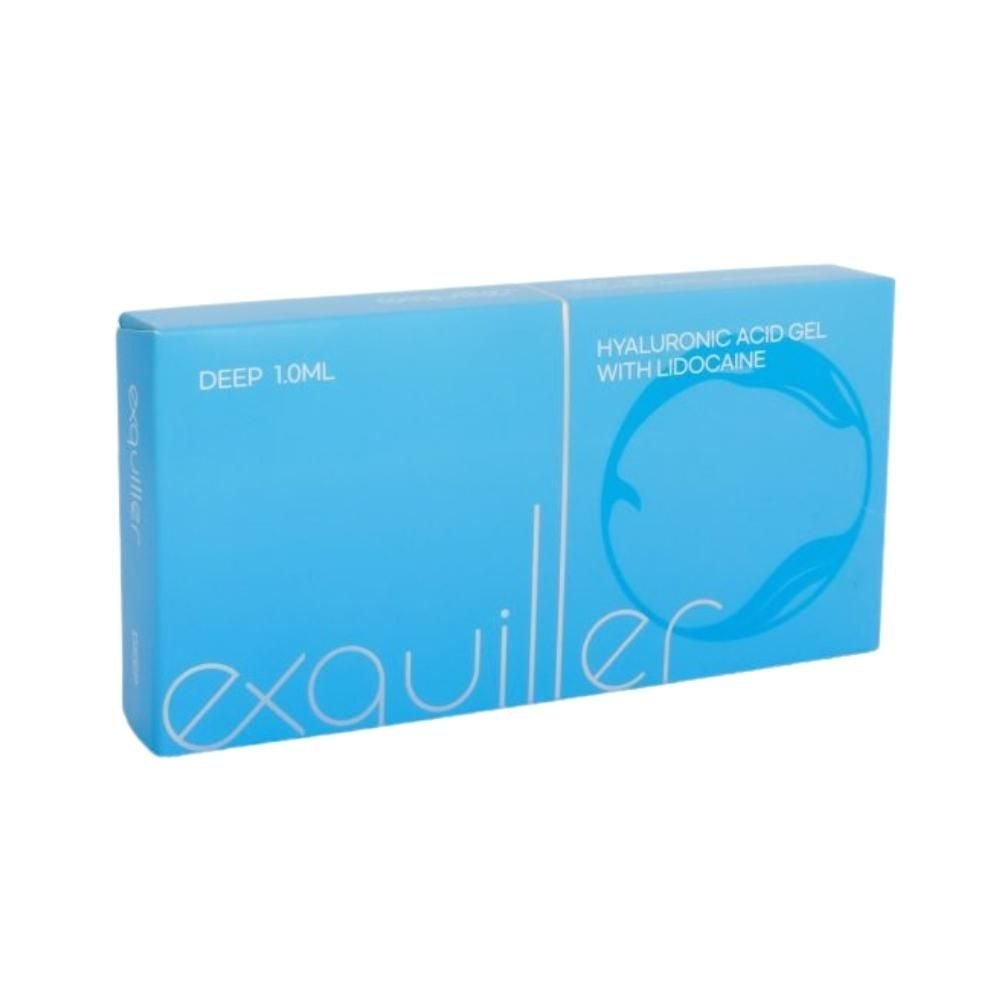
Exquiller Deep is a professional-grade, cross-linked hyaluronic acid dermal filler formulated with 0.3% lidocaine. Developed using proprietary HYBRID technology, it provides balanced viscosity and elasticity to smooth moderate-to-deep facial lines, restore facial volume, and enhance contours.
Active Composition: Cross-linked sodium hyaluronate at a concentration of 24 mg/mL, combined with 3 mg/mL (0.3%) lidocaine hydrochloride for procedural pain management.
Proprietary Technology: Manufactured using HYBRID Technology (Hyper Cross-linked, Based on non-animal HA, Residual-free, Improved Density and elasticity)—a two-stage cross-linking and enhanced purification process designed to minimize residual BDDE cross-linking agents while optimizing gel cohesivity and extrusion force.
Therapeutic Class: Mid-to-deep dermal soft-tissue augmentation device / Hyaluronic acid filler.
Regulatory Status: Professional-use medical device requiring administration exclusively by trained medical or aesthetic practitioners.
Volumetric Correction & Support: As a medium-viscosity formulation (Level 2 out of 4 in the Exquiller cross-linking hierarchy), Exquiller Deep provides robust structural support to lift depressed skin folds and replenish lost subcutaneous volume.
Hydration & Integration: The hydrophilic properties of the stabilized hyaluronic acid matrix bind water molecules within the extracellular matrix, while its hybrid monophasic-biphasic structure allows smooth tissue integration and natural molding capacity.
Indications:
Correction of moderate-to-deep facial wrinkles, folds, and depressions.
Volumization and contouring of targeted mid-face regions, such as forehead augmentation, cheek enhancement, and lip contouring or structural shaping.
Administration & Depth:
Supplied in a 1 mL pre-filled sterile syringe paired with ultra-thin walled (UTW) needles (typically 27G).
Injected precisely into the superficial dermis to the middle layer of the subcutis, depending on the specific anatomical target.
Duration of Effect: Typically persists between 6 to 8 months, influenced by the patient’s metabolic rate, injection site, and lifestyle factors.
Tissue Residency: The optimized cross-linking density increases resistance to endogenous hyaluronidase degradation, ensuring extended tissue residency compared to non-modified or lightly cross-linked gels.
Metabolism: Progressively degraded via normal enzymatic pathways into non-toxic monomers (glucuronic acid and N-acetylglucosamine), ultimately metabolizing into water and carbon dioxide.
Local tissue responses reflect standard mechanical needle insertion and acute soft-tissue adjustment.
Common ( to ): Transient injection site reactions including localized erythema, swelling, pain, tenderness, bruising, and firmness.
Uncommon ( to ): Temporary papules, localized asymmetry, or minor contour irregularities.
Rare / Severe (<1/1,000): Severe hypersensitivity reactions, localized granuloma formation, sterile abscesses, or vascular compromise secondary to inadvertent intravascular placement.
Known hypersensitivity to hyaluronic acid or amide-type local anesthetics (lidocaine).
Active cutaneous infections, inflammatory skin conditions (such as severe acne flare-ups or active herpes simplex), or open lesions at the target site.
History of severe systemic allergies, anaphylaxis, or predisposition to hypertrophic scarring or keloids.
Pregnancy and breastfeeding.
Vascular Safety: Clinicians must possess sound anatomical knowledge of facial vasculature, utilize aspiration techniques, and apply low extrusion force to avoid accidental intravascular injection.
Aseptic Handling: The syringe is intended for single-patient use only and must be handled under strict aseptic conditions.
Post-Procedure Care: Advise patients to avoid heavy pressure, intense friction, extreme temperatures (such as saunas, steam rooms, or intense UV exposure), and strenuous physical exercise for 24 to 48 hours post-injection.


 English English
  German
 Italian
 Dutch
Dutch
 Spanish