- Ihr Warenkorb ist leer
- Weiter Einkaufen


Preisklasse: £ 70.30 durch £ 222.00
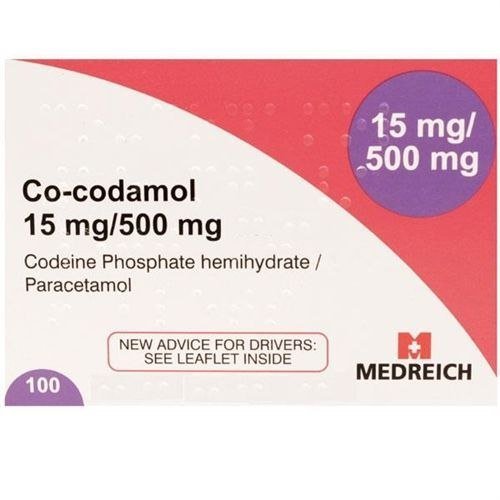
Co-Codamol combines two active pharmaceutical ingredients with distinct analgesic mechanisms:
Codeine Phosphate: A semi-synthetic phenanthrene-derivative opioid alkaloid acting as a central analgesic and antitussive.
Paracetamol (Acetaminophen): A centrally acting analgesic and antipyretic agent derived from p-aminophenol.
Under the Anatomical Therapeutic Chemical (ATC) system, this combination is indexed under N02BE51 (Paracetamol, combinations excl. psycholeptics).
Product Context: The 15/500 mg strength represents a low-to-moderate strength formulation (often available over-the-counter in certain jurisdictions under strict pharmacist supervision or via prescription internationally).
Controlled Status: Regulated as a Prescription Only Medicine (POM) or pharmacy-controlled medication depending on regional jurisdiction. Codeine content confers risks of physical dependence, tolerance, and misuse liability with prolonged use.
The combination utilizes synergistic central and peripheral pathways to control pain:
Paracetamol Action: Inhibits central prostaglandin synthesis (via action on cyclooxygenase enzymes COX-2 and COX-3) to elevate the pain threshold and reduce fever.
Codeine Opioid Agonism: Codeine acts partially as a prodrug; hepatic cytochrome P450 enzymes (specifically CYP2D6) metabolize a fraction of codeine into active morphine, which binds to central -opioid () receptors to modify nociceptive signaling.
Licensing for Co-Codamol 15/500 mg includes:
Acute Moderate Pain: Short-term management of acute moderate pain conditions (such as tension headaches, musculoskeletal aches, dental pain, or dysmenorrhea) not relieved by paracetamol, ibuprofen, or aspirin alone.
Dosing & Administration Parameters:
Adult Dosing: Typically 1 to 2 tablets taken orally every 4 to 6 hours as needed for pain.
Maximum Daily Limits: Strictly do not exceed 8 tablets in any 24-hour period due to the cumulative hepatotoxic risk of paracetamol (maximum daily paracetamol dose is 4,000 mg).
Duration Restrictions: Use must be restricted to short-term acute treatment (typically not exceeding 3 consecutive days without medical re-evaluation) to prevent the development of opioid dependence or medication-overuse headaches.
Exclusions: Contraindicated in children under 12 years of age, breastfeeding women, and known CYP2D6 ultra-rapid metabolizers.
Absorption: Both active ingredients are rapidly and well absorbed from the gastrointestinal tract following oral administration, with peak plasma concentrations () occurring within 30 to 60 minutes.
Distribution: Paracetamol distributes into most body tissues and crosses the placenta. Codeine exhibits low-to-moderate plasma protein binding and readily crosses the blood-brain barrier.
Biotransformation:
Paracetamol is metabolized primarily in the liver via glucuronidation and sulfation, with a small fraction metabolized via CYP2E1 into the toxic intermediate NAPQI (which is detoxified by glutathione).
Codeine undergoes hepatic O-demethylation via CYP2D6 into morphine and N-demethylation via CYP3A4 into norcodeine.
Elimination: Excreted primarily via the kidneys in urine as inactive glucuronide and sulfate metabolites. The elimination half-life for both components averages 2 to 4 hours.
Co-Codamol alters central pain processing, slows gastrointestinal motility, and exerts hepatic metabolic demands.
Common ( to ): Constipation, nausea, drowsiness, dizziness, lightheadedness, somnolence.
Uncommon ( to ): Dry mouth, abdominal discomfort, pruritus, skin rashes, sweating, urinary retention.
Rare / Severe (<1/1,000): Severe hepatotoxicity or acute liver failure (from paracetamol overdose), respiratory depression, severe allergic reactions (anaphylaxis, Stevens-Johnson syndrome), paralytic ileus, and dependence/withdrawal symptoms upon chronic cessation.
Known hypersensitivity to paracetamol, codeine, or formulation excipients.
Acute hepatic impairment or severe hepatocellular disease.
Acute respiratory depression, chronic obstructive pulmonary disease (COPD) with severe respiratory reserve depletion, or acute asthma attacks.
Pediatric patients under 12 years of age or post-tonsillectomy/adenoidectomy.
Alcohol & Hepatotoxic Agents: Chronic or excessive alcohol consumption co-administered with paracetamol drastically increases the risk of severe, fatal hepatotoxicity due to glutathione depletion and enhanced NAPQI formation.
CNS Depressants, Sedatives, & Alcohol: Co-ingestion with alcohol, benzodiazepines, or other central depressants produces additive central nervous system and respiratory depression.
CYP2D6 Inhibitors (e.g., Quinidine): Can inhibit the metabolic conversion of codeine to morphine, reducing the analgesic efficacy of the opioid component.
Paracetamol Overdose Risk: Patients must be strictly cautioned against concurrent use of other over-the-counter or prescription medications containing paracetamol (such as cold and flu remedies), as accidental paracetamol overdose causes severe, irreversible liver necrosis.
Opioid Dependency & Abuse: Due to the codeine content, prolonged use can result in physical dependence, tolerance, and psychological addiction. Taper gradually if discontinued after regular use.
| Menge | 200 Tabletten, 500 Tabletten, 1000 Tabletten |
|---|


 English English
  German
 Italian
 Dutch
Dutch
 Spanish