- Ihr Warenkorb ist leer
- Weiter Einkaufen


£ 259.00
Tirzepatide is a synthetic 39-amino-acid peptide engineered with a fatty diacid diacid-acyl chain moiety attached via a linker to lysine at position 20. It belongs to a novel therapeutic class: dual glucose-dependent insulinotropic polypeptide (GIP) and glucagon-like peptide-1 (GLP-1) receptor agonists (“twincretins”). Under the Anatomical Therapeutic Chemical (ATC) classification system, tirzepatide is indexed under A10BX16.
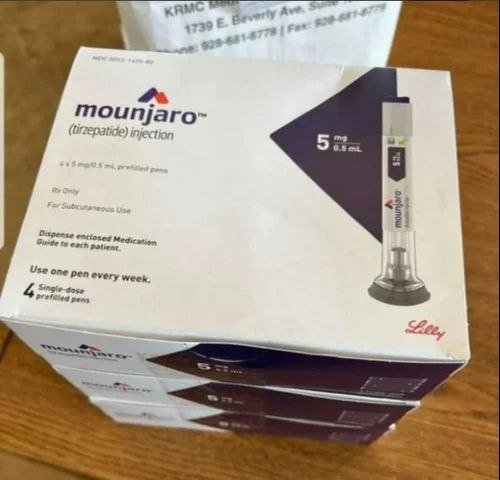
The Mounjaro KwikPen is a multi-dose pre-filled pen containing 2.4 mL of solution () designed to deliver 4 fixed weekly doses of 5 mg tirzepatide in a 0.6 mL volume per injection. In the UK, EU, and global jurisdictions, Mounjaro is a Prescription Only Medicine (POM).
Tirzepatide acts as a biased dual agonist at both native GIP and GLP-1 receptors, exhibiting greater potency at GIP receptors relative to GLP-1 receptors:
GIP Receptor Activation: Enhances glucose-dependent insulin secretion, improves postprandial glucagon dynamics, increases peripheral insulin sensitivity, and directly modulates lipid metabolism in adipose tissue.
GLP-1 Receptor Activation: Stimulates glucose-dependent pancreatic -cell insulin exocytosis, suppresses glucagon secretion from -cells during hyperglycaemia, slows gastric emptying, and activates central anorexigenic hypothalamic pathways to reduce appetite and energy intake.
The 5 mg weekly dose represents the primary maintenance dose following initial titration, producing significant reductions in glycated haemoglobin () and clinically meaningful body weight loss.
Licensing for Mounjaro 5 mg KwikPen includes:
Type 2 Diabetes Mellitus: Treatment of adults with insufficiently controlled type 2 diabetes mellitus as an adjunct to diet and exercise (as monotherapy when metformin is considered inappropriate, or as add-on therapy to other anti-hyperglycaemic medicinal products).
Weight Management: Adjunct to a reduced-calorie diet and increased physical activity for weight management in adults with:
An initial BMI of (obesity), or
An initial BMI of (overweight) in the presence of at least one weight-related comorbidity (e.g., hypertension, dyslipidaemia, obstructive sleep apnoea, cardiovascular disease).
Dosing & Escalation Regimen: Therapy is initiated at 2.5 mg once weekly for 4 weeks. At week 5, the dosage is escalated to the 5 mg once weekly maintenance dose. Depending on clinical response and tolerability, doses may be increased in 2.5 mg increments after at least 4 weeks on a given dose (up to a maximum of 15 mg once weekly).
Absorption: Absolute bio-availability following subcutaneous injection is approximately 80%. Peak plasma concentration () occurs between 8 and 72 hours () post-dose.
Distribution: Tirzepatide is extensively bound to plasma proteins (99%, primarily human serum albumin). Mean volume of distribution () is approximately .
Biotransformation: Tirzepatide is metabolised via proteolytic cleavage of the peptide backbone, -oxidation of the fatty acid moiety, and amide hydrolysis. It does not significantly inhibit or induce Cytochrome P450 (CYP) enzymes.
Elimination: Clearance is approximately , with an elimination half-life () of approximately 5 days (120 hours), supporting once-weekly subcutaneous dosing. Metabolites are excreted via urine and faeces.
Tirzepatide improves overall glucose homeostasis, decreases fasting and postprandial glucose levels, delays gastric transit, and reduces total fat mass.
Very Common (): Nausea, diarrhoea, vomiting, constipation, hypoglycaemia (when used in combination with sulfonylureas or insulin).
Common ( to ): Dyspepsia, abdominal pain, abdominal distension, eructation, flatulence, gastro-oesophageal reflux disease, fatigue, injection site reactions (erythema, pruritus), hair loss (alopecia), sinus tachycardia.
Uncommon ( to ): Acute pancreatitis, cholelithiasis, cholecystitis, elevated pancreatic enzymes (lipase, amylase), dysgeusia, delayed gastric emptying.
Rare (<1/1,000): Anaphylactic reactions, angioedema.
Hypersensitivity to tirzepatide or any of the formulation excipients.
Personal or family history of Medullary Thyroid Carcinoma (MTC).
Multiple Endocrine Neoplasia syndrome type 2 (MEN 2).
Oral Medications with Narrow Therapeutic Index: Due to tirzepatide-induced delay in gastric emptying, the rate and extent of absorption of concomitantly administered oral medicinal products (e.g., warfarin, digoxin) may be transiently altered, particularly during dose initiation and escalation.
Oral Contraceptives: Patients using oral hormonal contraceptives should be advised to switch to a non-hormonal contraceptive method, or add a barrier method, for 4 weeks after initiation and for 4 weeks after each dose escalation.
Insulin and Sulfonylureas: Increased risk of severe hypoglycaemia. A reduction in the dose of secretagogues or insulin may be required upon initiating or stepping up Mounjaro therapy.
Gastrointestinal Disease: Tirzepatide has not been studied in patients with severe gastrointestinal disease, including severe gastroparesis, and should be used with caution.
Acute Pancreatitis: Patients should be monitored for signs of acute pancreatitis (persistent, severe abdominal pain radiating to the back). If suspected, treatment must be permanently discontinued.
Renal Impairment & Dehydration: Gastrointestinal adverse reactions (vomiting, diarrhoea) may lead to volume depletion and acute kidney injury. Patients should be advised to maintain adequate hydration.
| Monate | 3, 4 |
|---|


 English English
  German
 Italian
 Dutch
Dutch
 Spanish