- Tu carrito está vacío
- Continuar comprando


Rango de precios: £ 70.30 por £ 140.60
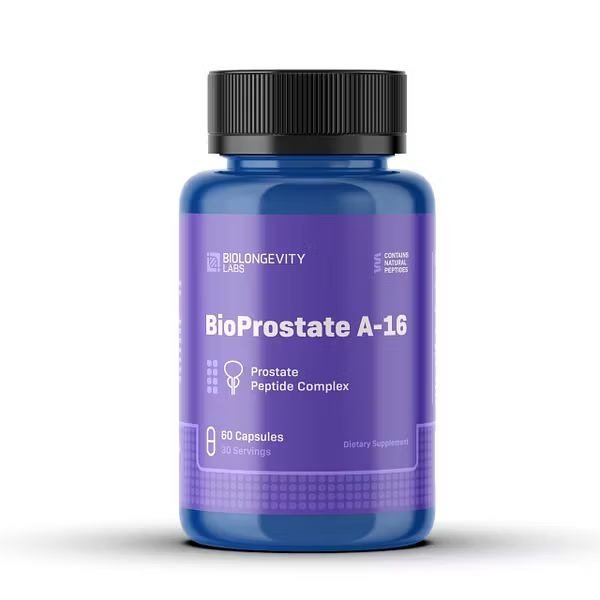
Prostate peptide bioregulators (widely identified in the scientific literature and international reference pharmacopoeias under designations such as Prostatilen, Vitaprost, or synthetic analogues such as the cytogen peptide KED) belong to a specialised category of biological response modifiers. Chemically, these compounds exist either as complex organ-specific polypeptide extracts or as fully synthetic short oligopeptides. Natural extractions are isolated from the prostatic glandular tissue of sexually mature bovine donors (Bos taurus) using acetic acid extraction and subsequent ultrafiltration, yielding a peptide mixture with a strict molecular weight cut-off below $5\text{ to }10\text{ kDa}$. The active fraction consists of ultra-short regulatory peptides (predominantly di-, tri-, and tetrapeptides), nucleopeptides, and trace organ-specific signalling motifs. Synthetic variants isolate and synthesize targeted active sequences chemically via solid-phase methods, most commonly the tripeptide sequence Lys-Glu-Asp (H-Lys-Glu-Asp-OH).
Within the regulatory framework of the United Kingdom, prostate peptide bioregulators do not hold marketing authorisation (MA) from the Medicines and Healthcare products Regulatory Agency (MHRA). They are not catalogued in the British National Formulary (BNF) and are not classified as Prescription Only Medicines (POM), Pharmacy (P) medicines, or General Sales List (GSL) substances under the Human Medicines Regulations 2012. In the UK, these preparations are commercialised strictly as non-medicinal food supplements, functional lifestyle products, or chemical research substances. In accordance with domestic statutory trading standards and food supplement legislation, commercial entities are legally prohibited from presenting medicinal or therapeutic claims concerning the diagnosis, mitigation, treatment, or cure of clinically established urological pathologies (such as benign prostatic hyperplasia [BPH], acute or chronic bacterial prostatitis, chronic pelvic pain syndrome [CPPS], or adenocarcinoma of the prostate).
The pharmacodynamics of prostate peptide bioregulators are anchored in the tissue-specific epigenetic model of short-chain peptide bioregulation, operating primarily via nuclear transactivation and cellular homeostasis within the prostatic parenchyma and stroma:
Direct Epigenetic and Transcriptional Regulation: Due to low molecular mass, compact hydrodynamic volume, and neutral or amphiphilic properties, short prostate oligopeptides cross the cell membranes of prostatic secretory epithelial cells, basal cells, and stromal smooth muscle cells. They translocate across the nuclear pore complex into the nucleoplasm, where they bind site-specifically to complementary nucleotide sequences within the major and minor grooves of double-stranded DNA and nucleosomal core histones. This interaction alters nucleosomal architecture, facilitates chromatin unwinding from heterochromatin to open euchromatin, and recruits RNA polymerase II, modulating the transcription of structural and regulatory genes essential for prostatic functional differentiation and secretory integrity.
Prostatic Epithelial and Secretory Homeostasis: In vitro and animal models indicate that prostate peptides stimulate the transcriptional synthesis of functional cellular proteins and enzymes involved in the secretory physiology of the prostate gland, including components responsible for seminal fluid liquefaction, zinc transport, and prostatic acid phosphatase turnover. This helps preserve functional cellular differentiation without inducing hyperplastic or neoplastic cellular growth.
Anti-Inflammatory and Stromal Microvascular Modulation: In tissue models of abacterial prostatic inflammation, prostate peptides attenuate local inflammatory cascades. They downregulate excessive synthesis of pro-inflammatory cytokines—specifically tumour necrosis factor-alpha (TNF-$\alpha$), interleukin-1 beta (IL-1$\beta$), and interleukin-6 (IL-6)—while suppressing microvascular hyperpermeability and interstitial oedema within the prostatic capsule and surrounding periurethral stroma.
Cytoprotection and Apoptosis Regulation: Exposure to short prostatic peptides reduces oxidative stress-induced cell damage in glandular epithelium. This cytoprotective action is mediated by downregulating pro-apoptotic executioners (caspase-3 and Bax), preserving mitochondrial inner membrane integrity, and upregulating endogenous enzymatic antioxidants, notably superoxide dismutase (SOD) and glutathione peroxidase.
Prostate peptide bioregulators possess no approved clinical indications in the United Kingdom. No randomized, double-blind, multicentre clinical trials meeting the statutory criteria of the MHRA have been conducted to establish clinical efficacy, therapeutic reproducibility, or urological safety profiles.
The National Institute for Health and Care Excellence (NICE) does not endorse, mention, or integrate prostate peptide bioregulators into any clinical pathway. They are entirely absent from clinical guidelines governing lower urinary tract symptoms in men (CG97) and prostate cancer diagnosis and management (NG131).
The use of prostate bioregulators is confined strictly to non-clinical consumer wellness contexts and preliminary laboratory research. In exploratory literature and private functional health sectors, they are investigated for:
Supporting functional physiological resilience of the prostate gland in non-pathological, age-related tissue changes.
Complementary nutritional support during convalescence from non-specific pelvic or perineal discomfort.
Maintenance of baseline prostatic secretory balance and microcirculation in ageing men.
Preclinical animal models evaluating prostatic stromal tone and inflammatory mitigation under experimental conditions.
These agents hold no status within the NHS drug tariff, cannot be prescribed on NHS prescription forms (FP10), and must never be substituted for established, evidence-based urological interventions, including alpha-1 adrenoreceptor antagonists (e.g., tamsulosin, alfuzosin), 5-alpha reductase inhibitors (e.g., finasteride, dutasteride), anticholinergics, phosphodiesterase type 5 (PDE5) inhibitors, antimicrobial therapy for bacterial prostatitis, or definitive surgical resection (e.g., transurethral resection of the prostate [TURP]).
Because prostate peptide bioregulators are predominantly formulated as oral gelatin capsules, sublingual drops, or rectal suppositories, their pharmacokinetic disposition is determined by mucosal and gastrointestinal transport properties:
Absorption: Crude polypeptide mixtures undergo extensive enzymatic degradation within the gastrointestinal tract via gastric pepsin and pancreatic serine proteases (trypsin, chymotrypsin). However, ultra-short di-, tri-, and tetra-peptides exhibit structural resistance to complete brush-border aminopeptidase hydrolysis. These intact short sequences cross the apical enterocyte membrane via the low-affinity, high-capacity proton-coupled peptide transporter 1 (PEPT1). Sublingual and rectal formulations bypass first-pass gastrointestinal degradation and avoid substantial hepatic first-pass extraction, diffusing directly into the regional venous plexuses. Peak systemic concentrations ($T_{max}$) of intact circulating short peptides are typically observed within 20 to 50 minutes post-dose.
Distribution: Following mucosal absorption and portal transport, the peptides enter the systemic vascular compartment. With a low molecular weight and hydrophilic characteristics, the apparent volume of distribution ($V_d$) corresponds closely to total extracellular fluid volume. Experimental biodistribution models indicate selective tropism toward pelvic and urogenital tissues, crossing vascular and interstitial barriers to access the prostatic stroma and glandular acini. Plasma protein binding is negligible ($<5\%$).
Biotransformation: Prostate bioregulators do not interact with or undergo metabolic clearance via the hepatic cytochrome P450 (CYP450) microsomal monooxygenase system (e.g., CYP1A2, CYP2C9, CYP3A4). Systemic clearance is mediated entirely by circulating plasma aminopeptidases, carboxypeptidases, and cellular endopeptidases, which rapidly cleave peptide bonds into native constituent individual L-amino acids. These liberated amino acids enter the body’s general endogenous amino acid turnover and protein synthesis pools.
Elimination: Biological clearance of intact peptides is rapid, with an elimination half-life ($t_{1/2}$) ranging between 15 and 60 minutes. Direct renal excretion of intact macromolecular peptides is negligible; metabolites are eliminated as urinary urea, with trace carbon atoms exhaled as carbon dioxide via cellular respiration.
The primary physiological effect reported in preclinical investigations is the normalization of prostatic microvascular perfusion and secretory activity, accompanied by a reduction in interstitial stromal oedema and cellular inflammatory infiltration. In animal models of chemically induced abacterial prostatitis, these agents facilitate the preservation of epithelial architecture and luminal secretion without altering systemic endocrine testosterone or dihydrotestosterone (DHT) levels.
Because prostate bioregulators have not undergone structured, large-scale Phase I–IV clinical pharmacovigilance surveillance, documentation of adverse reactions is derived primarily from observational cohorts and preclinical animal toxicology:
Very Common ($\ge 1/10$): None documented in clinical literature.
Common ($1/100$ to $<1/10$): Mild, transient gastrointestinal symptoms following oral intake, including epigastric discomfort, nausea, abdominal fullness, and mild looseness of stool; local anorectal discomfort following suppository administration.
Uncommon ($1/1,000$ to $<1/100$): Transient sensations of localized pelvic warmth; mild cephalalgia; localized cutaneous pruritus or mild maculopapular rash; transient alterations in urinary frequency.
Rare ($1/10,000$ to $<1/1,000$): Type I immediate allergic hypersensitivity reactions (urticaria, angioedema, or bronchospasm), principally triggered in atopic individuals sensitized to bovine or porcine structural protein residues.
Biological and Diagnostic Hazards: Unregulated preparations derived from non-certified mammalian sources carry theoretical risks of transmissible spongiform encephalopathies (TSE/BSE) if origin verification is absent. Crucially, self-administering unlicensed bioregulators to manage progressive lower urinary tract symptoms (LUTS) presents a serious clinical hazard by potentially delaying diagnostic evaluation for prostate adenocarcinoma, acute urinary retention, or obstructive nephropathy.
The handling and administration of prostate bioregulators require strict adherence to fundamental urological and pharmacological safety parameters:
Contraindications:
Documented hypersensitivity or history of allergic anaphylaxis to bovine- or porcine-derived biological substances, gelatin, or any formulation excipients.
Active prostate adenocarcinoma: Absolute contraindication in patients with known, suspected, or undergoing treatment for prostate carcinoma. Modulating cellular transcription, viability, or angiogenic signalling in neoplastic prostate tissue is clinically hazardous.
Acute bacterial prostatitis: Absolute contraindication as a self-care measure; active systemic bacterial infections of the prostate require emergency medical diagnosis, blood cultures, and targeted systemic antimicrobial therapy.
Female administration: Contraindicated in females; formulated specifically for male pelvic anatomy with no clinical or safety data in female populations.
Paediatric population: Contraindicated in infants, children, and adolescents under 18 years due to an absence of safety and developmental data in the maturing paediatric and adolescent male genitourinary tract.
Drug Interactions:
Alpha-blockers (e.g., tamsulosin, alfuzosin, doxazosin) and 5-alpha reductase inhibitors (e.g., finasteride, dutasteride): No direct pharmacokinetic interactions via CYP450 enzymes have been documented; however, patients established on licensed medical therapy for BPH must not interrupt or replace their prescription regimens.
Cytochrome P450 interactions: There are no documented pharmacokinetic induction or inhibition interactions with hepatic CYP450 isoenzymes.
Clinical Precautions:
Urological Alarm Symptoms (“Red Flags”): Patients presenting with red flag urological symptoms—including frank visible haematuria, acute painful urinary retention, persistent dysuria with pyrexia/rigors, progressive severe hesitancy, or unintentional weight loss—mandate immediate emergency or urgent two-week-wait urological referral rather than self-care with dietary supplements.
Prostate-Specific Antigen (PSA) and Digital Rectal Examination (DRE): Men over 45 years presenting with persistent LUTS must undergo formal medical assessment, including serum PSA testing, renal function estimation (eGFR/serum creatinine), and digital rectal examination, prior to introducing any supplementary product.
Source Purity: Clinicians and researchers must verify that natural mammalian extracts possess documented batch-specific certification confirming extraction from BSE-free herds and compliance with UK/EU biological safety criteria.
| Cantidad | 20 Caps, 60 Caps |
|---|


 English English
  German
 Italian
 Dutch
Dutch
 Spanish
Reseñas
Todavía no hay reseñas.