- Il tuo carrello è vuoto
- Continua Lo Shopping


£ 33.30
Orlistat 120mg is a licensed solid oral pharmaceutical preparation (available as the innovator brand Xenical and authorized multi-source generic hard capsules). Chemically designated as $(2S)\text{-1-[(2S,3S)-3-hexyl-4-oxooxetan-2-yl]tridecan-2-yl (2S)-2-formamido-4-methylpentanoate}$, orlistat is a semi-synthetic, fully saturated derivative of lipstatin, a naturally occurring compound isolated from the bacterium Streptomyces toxytricini. Structurally, it features a strained four-membered $\beta\text{-lactone}$ (2-oxetanone) ring linked to an aliphatic lipophilic hydrocarbon backbone carrying an $N\text{-formyl-L-leucine}$ ester side chain. The strained $\beta\text{-lactone}$ ring functions as an electrophilic suicide trap, covalently acylating the active-site catalytic serine residues of gastrointestinal lipases within the gut lumen. Its molecular formula is $\text{C}_{29}\text{H}_{53}\text{NO}_5$, yielding an average molecular weight of $495.73\text{ g/mol}$.
Standard solid oral formulations of Orlistat 120mg in the United Kingdom present as:
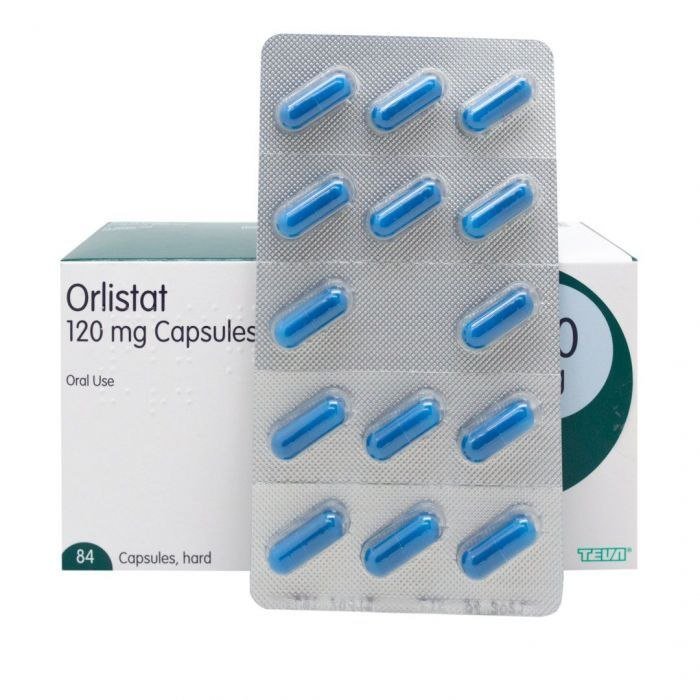
Capsule Morphology: Two-piece hard gelatin capsules (typically turquoise-blue or opaque blue, often marked with manufacturer codes such as “ROCHE” / “XENICAL 120” or generic strength debossments).
Composition: Each hard capsule contains a pelletized formulation of $120\text{ mg}$ of orlistat.
Excipients: Microcrystalline cellulose (E460), sodium starch glycolate, colloidal anhydrous silica, and sodium lauryl sulfate, encapsulated in a shell containing gelatin, titanium dioxide (E171), and indigo carmine (E132).
Within the United Kingdom regulatory framework:
Medicinal Classification: Orlistat 120mg is categorized as a Prescription Only Medicine (POM) governed by the Human Medicines Regulations 2012.
Over-the-Counter Variance: A lower-strength $60\text{ mg}$ presentation (e.g., Alli) is regulated as a Pharmacy (P) medicine, licensed for over-the-counter supply under pharmacist supervision for adults with a $\text{BMI} \ge 28\text{ kg/m}^2$.
Controlled Drug Scheduling: Orlistat is not a controlled substance under the Misuse of Drugs Act 1971 or the Misuse of Drugs Regulations 2001. It has no central nervous system activity, zero receptor binding in brain tissue, and no intrinsic abuse or physical dependence liability.
NHS Formulary Positioning & NICE Guidelines: Listed on the NHS Drug Tariff and catalogued in the British National Formulary (BNF). Prescribing is governed by strict National Institute for Health and Care Excellence criteria (NICE Clinical Guideline CG189: Obesity), functioning as an oral, non-systemic adjunct to lifestyle and dietary caloric restriction.
Diversion and Counterfeits: Due to high global demand for non-invasive cosmetic and clinical weight loss, counterfeit orlistat capsules are frequently intercepted in unregulated international mail parcels and grey-market online vendors. Counterfeit preparations often contain inert fillers, sub-potent active ingredients, or unlisted, dangerous adulterants—such as banned central stimulants (sibutramine, phentermine), synthetic cathinones, or industrial diuretics—presenting severe cardiovascular risks.
Unlike centrally acting anorectics that suppress appetite by modulating central catecholaminergic or serotonergic pathways, orlistat exerts its therapeutic actions locally within the gastrointestinal lumen, exhibiting virtually no direct systemic pharmacological effects:
Covalent Inhibition of Gastrointestinal Lipases:
In the lumen of the stomach and upper small intestine, orlistat targets the catalytic triad of gastric lipase (secreted by gastric chief cells) and pancreatic lipase (secreted by pancreatic acinar cells).
The electrophilic carbonyl carbon of orlistat’s reactive four-membered $\beta\text{-lactone}$ ring undergoes nucleophilic attack by the hydroxyl oxygen of the catalytic serine residue ($\text{Ser}^{152}$ in pancreatic lipase).
This reaction forms an inactive, stable covalent ester adduct (acyl-enzyme complex):
This stable covalent bond blocks the enzyme’s catalytic triad, completely preventing it from hydrolyzing ingested dietary fat.
Blockade of Triglyceride Hydrolysis:
Physiological lipid digestion requires gastric and pancreatic lipases to hydrolyze water-insoluble dietary triglycerides into absorbable free fatty acids and 2-monoacylglycerols.
Lipase inactivation by orlistat leaves approximately $30\%$ of dietary triglycerides intact and unhydrolyzed.
Lipid Malabsorption and Caloric Deficit:
Enterocytes cannot absorb intact triglycerides through the intestinal brush-border membrane via passive diffusion or fatty acid transport proteins (CD36).
Unhydrolyzed triglycerides remain within the gastrointestinal lumen and travel through the small and large intestines to be excreted in the feces.
At the recommended therapeutic dose of $120\text{ mg}$ three times daily, orlistat inhibits approximately $30\%$ of dietary fat absorption, generating a daily caloric deficit of roughly $200\text{ to }300\text{ kcal}$ (depending on baseline dietary fat intake), which drives sustained weight reduction.
Secondary Luminal and Systemic Effects:
Fat-Soluble Micronutrient Depletion: Because dietary lipids serve as the essential micellar transport vehicle for absorbing fat-soluble vitamins (vitamins A, D, E, and K) and lipophilic provitamins ($\beta$-carotene), lipid malabsorption reduces the systemic uptake of these micronutrients.
Enteric Hyperoxaluria Mechanics: Unabsorbed free fatty acids within the bowel lumen bind (saponify) divalent cations, primarily calcium ($\text{Ca}^{2+}$). Calcium, which normally complexes with dietary oxalate in the gut to form an insoluble, non-absorbable calcium oxalate precipitate excreted in stool, is depleted. Unbound, soluble oxalate remains free to be hyperabsorbed across the colonic mucosa, causing enteric hyperoxaluria and predisposing patients to calcium oxalate nephrolithiasis and acute oxalate nephropathy.
Orlistat 120mg holds specific, licensed clinical indications under the British National Formulary (BNF) and NICE Guideline CG189 (Obesity: identification, assessment and management):
Adjunctive Pharmacological Management of Obesity:
Indicated in conjunction with a mildly hypocaloric, nutritionally balanced diet (in which approximately $30\%$ of calories are derived from fat) for the management of obesity in patients meeting strict baseline body-mass criteria:
An initial Body Mass Index (BMI) of $\ge 30\text{ kg/m}^2$, OR
An initial BMI of $\ge 28\text{ kg/m}^2$ in the presence of associated life-threatening comorbidities or risk factors (e.g., type 2 diabetes mellitus, hypertension, dyslipidemia, metabolic syndrome, obstructive sleep apnea).
Adult Prescribing Regimen:
$120\text{ mg}$ (one capsule) orally three times daily, swallowed with water immediately before, during, or up to one hour after each main meal.
Meal Omission Rule: If a meal is missed, or if a meal contains absolutely no dietary fat, the dose of orlistat must be omitted, as no pharmacological substrate is present.
Dosing Ceiling: Doses above $120\text{ mg}$ three times daily produce no additional weight-loss benefit, but significantly exacerbate adverse gastrointestinal effects.
NICE Prescribing Governance and Discontinuation Rules (“12-Week Rule”):
Under NHS prescribing criteria, treatment with orlistat must be evaluated at 12 weeks following initiation:
Therapy should only be continued beyond 12 weeks if the patient has lost at least $5\%$ of their initial body weight from the start of pharmacological treatment.
Special Population (Type 2 Diabetes): In patients with type 2 diabetes—who frequently lose weight more slowly—NICE permits continuation if the patient has lost at least $3\%$ of their initial body weight at 12 weeks, provided there is documented clinical evidence of improved glycemic control (e.g., reduction in $\text{HbA}_{1c}$).
Duration Ceiling: Continuous therapy is licensed and supported by NICE for up to 12 months (rarely extended up to 24 months, where annual formal clinical reviews of nutritional status and renal health are mandatory).
Paediatric and Adolescent Exclusions:
Orlistat 120mg is not licensed for use in children and adolescents under 18 years of age in the UK. (Specialist tertiary pediatric obesity services may initiate off-label orlistat only in adolescents $\ge 12$ years with severe obesity complicated by serious comorbidities, under multidisciplinary supervision).
In non-medical, eating disorder, or unauthorized settings:
Misused by individuals with anorexia nervosa, bulimia nervosa, or body dysmorphic disorder as a compensatory, non-absorptive weight control strategy.
Acquired online by non-obese individuals ($\text{BMI} < 25\text{ kg/m}^2$) seeking rapid cosmetic weight loss, exposing them to micronutrient deficiencies and fluid/electrolyte shifts without clinical indication.
The pharmacokinetic behavior of Orlistat 120mg is characterized by minimal systemic absorption, extensive local gastrointestinal retention, and almost exclusive fecal elimination:
| Pharmacokinetic Parameter | Value / Metric | Clinical Interpretation |
| Systemic Bioavailability | $<1\text{ to }2\%$ (Minimal) | Acts locally within the gut lumen; systemic drug exposure is negligible. |
| Time to Peak Concentration ($T_{max}$) | $6.0\text{ to }8.0\text{ hours}$ | Reflects trace systemic absorption; clinically irrelevant to efficacy. |
| Volume of Distribution ($V_d$) | Not calculable | Distribution is minimal; $>99\%$ remains confined within the bowel lumen. |
| Plasma Protein Binding | $>99\%$ (of absorbed fraction) | Circulates bound primarily to human serum albumin and lipoproteins. |
| Metabolic Site | Gastrointestinal wall | Presystemic biotransformation within the intestinal enterocyte wall. |
| Major Inactive Metabolites | M1 (hydrolyzed lactone), M3 (cleaved leucine) | Extremely weak lipase inhibitors ($>1,000$-fold less potent); biologically inactive. |
| Primary Elimination Route | Feces ($\sim 97\%$, $83\%$ as unchanged parent) | Excreted directly via stool; complete clearance occurs within 3 to 5 days. |
| Renal Elimination | $<2\%$ (Cumulative) | Minimal renal clearance; trace polar metabolites only. |
| Elimination Half-Life ($t_{1/2}$) | $1\text{ to }2\text{ hours}$ (absorbed trace) | Luminal transit time mirrors physiological fecal transit (24–48 hours). |
Presystemic Metabolism: The tiny fraction ($<1\%$) of orlistat that crosses the intestinal brush-border membrane undergoes rapid presystemic biotransformation within the enterocytes of the gastrointestinal wall.
Metabolite Formation: Hydrolysis of the $\beta\text{-lactone}$ ring generates metabolite M1 (a 4-ring open structure), which subsequently undergoes cleavage of its $N\text{-formyl-L-leucine}$ side chain to yield metabolite M3. Both metabolites possess negligible lipase-inhibitory activity ($<0.1\%$ that of orlistat) and circulate at extremely low concentrations without toxicological significance.
Lack of Cytochrome P450 Involvement: Orlistat does not significantly induce or inhibit major hepatic cytochrome P450 enzymes (CYP1A2, CYP2D6, CYP3A4, CYP2C9, CYP2C19). Its clinical drug interactions are driven almost entirely by luminal absorption interference rather than systemic metabolic competition.
Fecal Normalization: Following drug cessation, fecal fat levels and gastrointestinal lipase activity return to pre-treatment baselines within 48 to 72 hours.
Therapeutic administration produces steady weight reduction, improves peripheral insulin sensitivity, lowers fasting blood glucose, and reduces total and low-density lipoprotein (LDL) cholesterol. However, the presence of substantial quantities of unabsorbed dietary fat in the lower gastrointestinal tract produces a characteristic spectrum of local gastrointestinal adverse effects:
Gastrointestinal Adverse Effects (Very Common, $\ge 1/10$):
Oily Spotting (Steatorrhea): Passage of unabsorbed liquid fat per rectum, frequently staining undergarments without prior sensation of defecation.
Fecal Urgency and Incontinence: Inability to retain oily rectal contents, leading to involuntary fecal soiling.
Flatus with Discharge: Passing gas accompanied by unabsorbed oily liquid droplets.
Fatty / Oily Evacuations: Stools that are pale, bulky, greasy, malodorous, and float in the toilet bowl.
Increased defecation frequency, abdominal pain, flatulence, and liquid or soft stools.
Dietary Correlation: The frequency and severity of these gastrointestinal effects are directly proportional to dietary fat intake. Ingesting a high-fat meal ($>30\%$ total fat) while taking orlistat causes severe, explosive steatorrhea and abdominal cramping, functioning as a behavioral aversive-conditioning mechanism.
Nutritional and Micronutrient Deficiencies (Common, $1/100$ to $<1/10$):
Fat-Soluble Vitamin Depletion: Subclinical or clinical reductions in circulating serum concentrations of vitamins A, D, E, and K, as well as $\beta$-carotene, occur during long-term therapy:
Vitamin D Deficiency: Can compound bone mineral density loss and precipitate secondary hyperparathyroidism.
Vitamin K Depletion: Disrupts hepatic synthesis of clotting factors (II, VII, IX, X), prolonging prothrombin time (INR) in patients taking oral anticoagulants.
Severe, Emergent and Life-Threatening Hazards:
Enteric Hyperoxaluria and Oxalate Nephropathy:
Unabsorbed luminal fatty acids bind with dietary calcium, leaving unbound soluble oxalate free to be hyperabsorbed across the colonic mucosa.
Increased urinary oxalate excretion can precipitate calcium oxalate crystals in the renal parenchyma, leading to calcium oxalate nephrolithiasis, acute oxalate nephropathy, interstitial fibrosis, and irreversible end-stage renal disease (ESRD), particularly in patients with baseline chronic kidney disease (CKD) or volume depletion.
Severe Hepatic Injury (Post-Marketing Safety Alerts):
Rare cases of acute hepatic injury—including hepatocellular necrosis, acute hepatic failure, and hepatic encephalopathy requiring liver transplantation—have been reported to the MHRA and FDA. While causality remains unproven due to negligible systemic absorption, any emergence of clinical signs of hepatic injury (jaundice, pruritus, dark urine, pale stools, right upper-quadrant abdominal pain) mandates immediate drug cessation.
Cholelithiasis and Biliary Colic: Rapid weight reduction induced by orlistat alters biliary cholesterol saturation, accelerating the formation of cholesterol gallstones and precipitating acute cholecystitis or biliary colic.
Prescribing and monitoring Orlistat 120mg requires strict adherence to anatomical contraindications, nutritional surveillance, and luminal drug-absorption interaction screening:
Contraindications:
Chronic Malabsorption Syndrome: Absolute Contraindication. Patients with pre-existing gastrointestinal malabsorption (e.g., short-bowel syndrome, untreated celiac disease, cystic fibrosis, extensive Crohn’s disease) risk severe, life-threatening nutritional and micronutrient collapse.
Cholestasis: Absolute contraindication; impaired biliary drainage already limits normal micellar lipid digestion, worsening fat malabsorption.
Pregnancy and Breastfeeding: Absolute Contraindication. Weight loss offers no clinical benefit during pregnancy and can induce maternal-fetal micronutrient starvation; unknown whether trace metabolites distribute into breast milk, but fat malabsorption can disrupt infant nutritional intake.
Known Hypersensitivity: Hypersensitivity to orlistat or any of the capsule excipients.
Drug Interactions (Luminal Absorption Interference):
Ciclosporin (Critical Immunosuppressive Hazard): Orlistat significantly impairs the gastrointestinal absorption of ciclosporin, reducing its plasma $AUC$ by up to $30\text{ to }50\%$. In organ transplant recipients, this precipitates acute graft rejection.
Management: If co-administration cannot be avoided, ciclosporin must be administered at least 3 hours before or 3 hours after orlistat, accompanied by frequent therapeutic drug monitoring (TDM) of trough blood levels.
Levothyroxine (Endocrine Interaction): Co-administration can reduce the absorption of levothyroxine, leading to clinical hypothyroidism and elevated thyroid-stimulating hormone (TSH). Doses must be separated by a minimum interval of at least 4 hours, with regular thyroid function surveillance.
Vitamin K Antagonists (Warfarin, Phenprocoumon): By reducing vitamin K absorption, orlistat can amplify the anticoagulant response, leading to unexplained elevations in prothrombin time / INR and increased hemorrhage risks. Co-prescribing mandates close INR monitoring.
Antiepileptic Drugs (e.g., Sodium Valproate, Lamotrigine, Phenytoin): Orlistat can decrease the absorption of oral antiepileptics, precipitating breakthrough seizures. Prescribers must monitor anticonvulsant plasma concentrations and seizure frequency.
Fat-Soluble Vitamin Supplements: Routine oral multivitamin preparations containing vitamins A, D, E, and K should be separated from orlistat by at least 2 hours (ideally administered at bedtime) to avoid malabsorption of the supplement itself.
Oral Contraceptives: While orlistat does not directly interact pharmacokinetically with synthetic estrogens or progestogens, severe or persistent diarrhea induced by orlistat can impair contraceptive pill absorption. Patients must be advised to employ secondary barrier contraception in the event of severe, continuous diarrhea.
Clinical Precautions and Long-Term Surveillance:
Nutritional and Vitamin Supplementation Mandate:
In patients maintained on long-term orlistat therapy ($>6\text{ months}$), clinicians should consider co-prescribing a daily fat-soluble multivitamin supplement (containing vitamins A, D, E, K, and $\beta$-carotene) taken once daily at bedtime.
Renal Risk Surveillance:
Baseline and periodic renal function testing (serum creatinine, eGFR) and urinalysis for microhematuria/crystalluria should be performed in patients with pre-existing CKD or those at risk of hyperoxaluria and calcium oxalate kidney stones. Patients must be counseled to maintain adequate systemic hydration ($2\text{ to }3\text{ L/day}$ of water) to minimize urinary oxalate crystallization.
Dietary Fat Counseling:
Patients must be educated that orlistat is not a license to consume unrestricted dietary fat. The daily intake of fat must be distributed evenly across the three main meals. Ingestion of an isolated high-fat meal ($>35\text{ to }40\text{ g}$ of fat in a single sitting) will universally provoke severe steatorrhea, cramping, and fecal incontinence.
Acute Overdose Management (“Red Flags”):
Ingestion of massive single doses (up to $800\text{ mg}$ acutely) or chronic cumulative doses up to $400\text{ mg}$ three times daily has been evaluated in clinical trials; systemic toxicity is absent due to negligible absorption.
Massive acute overdose presents primarily as profuse, watery, oily diarrhea, severe abdominal cramping, and secondary volume depletion:
Supportive Fluid Resuscitation: Administer oral or intravenous rehydration solutions to correct dehydration and electrolyte losses.
Observation: Monitor for systemic fluid loss and electrolyte derangements; gastric lavage or activated charcoal is rarely required unless co-ingestants are suspected.
Hai difficoltà a combattere il grasso ostinato e cerchi una soluzione affidabile? Orlistat 120 mg soluzione? Questo farmaco per la perdita di peso, disponibile solo su prescrizione medica, è progettato per aiutare gli adulti a gestire l'obesità bloccando l'assorbimento dei grassi alimentari. A differenza delle diete drastiche o degli integratori non comprovati, Capsule di Orlistat da 120 mg Agisce alla radice del problema dell'aumento di peso, rappresentando quindi una scelta ideale per ottenere risultati duraturi.
Orlistat 120 mg agisce come inibitore della lipasi, legandosi agli enzimi del sistema digestivo che scompongono i grassi. Fino al 30% dei grassi consumati attraversa il corpo senza essere digerito e viene eliminato naturalmente. Prendine una Capsule di orlistat con ogni pasto principale contenente grassi (fino a tre volte al giorno). Per ottenere i migliori risultati Risultati dell'orlistatAbbinatelo a una dieta ipocalorica e a basso contenuto di grassi e a un'attività fisica regolare. Studi clinici dimostrano che, se combinato con cambiamenti nello stile di vita, chi lo assume perde dal 5 al 10% del peso corporeo entro un anno.
Cercare acquistare Orlistat onlineConsultare sempre un medico per ottenere una prescrizione e accertarsi che il farmaco sia adatto al proprio caso.
Comune effetti collaterali dell'orlistat include oily spotting, gas with discharge, urgent bowel movements, and fecal urgency—often reduced by limiting fat intake (<30% of calories). Rare issues: vitamin deficiencies (take A, D, E, K supplements). Not for pregnant/nursing women, gallbladder issues, or chronic malabsorption. Monitor with healthcare provider.
Dose standard: Orlistat tre volte al giorno con pasti contenenti grassi. Saltare se il pasto è senza grassi. Monitorare i progressi con un diario. Abbinare a un deficit calorico giornaliero di 500 calorie per risultati ottimali. Orlistat per la perdita di peso.
Pronti alla trasformazione? Parliamone Orlistat 120 mg - Farmacia Trusthill oppure nella tua regione con un medico di base e online da Trusthill Pharmacy. Ottieni risultati concreti in tutta sicurezza: inizia il tuo percorso oggi stesso!


 English English
  German
 Italian
 Dutch
Dutch
 Spanish

