- Uw winkelwagen is leeg
- Verder Winkelen


£ 177.60
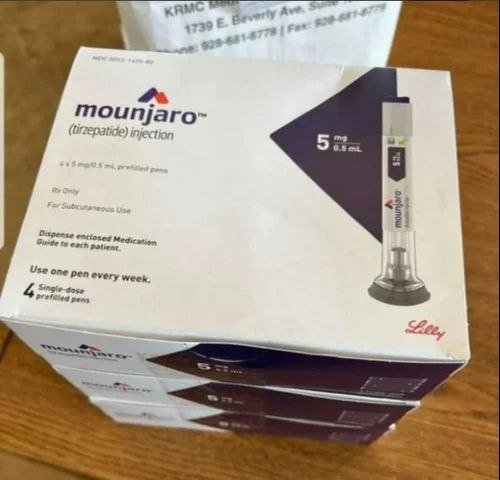
UK clinical and medical device monograph on disposable hypodermic pen needles compatible with the Mounjaro KwikPen (tirzepatide), detailing ISO 11608-2 standards, gauge/length specifications, subcutaneous injection technique, and lipodystrophy mitigation.
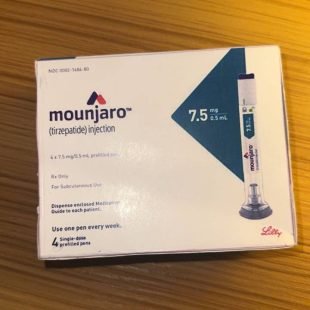
“Mounjaro KwikPen Needles” refers to single-use, sterile hypodermic pen needles designed to attach to multi-dose pre-filled pen injectors—specifically the Mounjaro KwikPen (Eli Lilly and Company). The Mounjaro KwikPen is a multi-dose delivery device pre-filled with a solution of tirzepatide (a dual glucose-dependent insulinotropic polypeptide [GIP] and glucagon-like peptide-1 [GLP-1] receptor agonist).
Unlike single-dose autoinjectors utilized in certain international territories (which feature an integrated, pre-shielded, automated firing needle), the multi-dose KwikPen distributed in the United Kingdom, the European Union, and other global regions does not come with integrated or pre-attached needles. Instead, each multi-dose pen (delivering four fixed weekly doses of $2.5\text{ mg}$, $5\text{ mg}$, $7.5\text{ mg}$, $10\text{ mg}$, $12.5\text{ mg}$, or $15\text{ mg}$) requires the manual attachment of an external, disposable hypodermic needle prior to every individual administration.
From a regulatory and technical standpoint:
Medical Device Classification: Hypodermic pen needles are classified as Class IIa Medical Devices in the UK and European Union under the UK Medical Devices Regulations 2002 (as amended) and EU Regulation 2017/745 (MDR). They bear the UKCA or CE mark of conformity.
Standardization: Pen needles are manufactured in accordance with ISO 11608-2 (Needle-based injection systems for medical use — Requirements and test methods — Part 2: Double-ended pen needles). This international standard ensures universal mechanical compatibility (thread pitch, seal puncture depth, and fluid pathway integrity) between the needle hub and the KwikPen cartridge septum.
Prescription & Availability Status (UK): Under the Human Medicines Regulations 2012, sterile pen needles are available as medical devices. They are catalogued in the British National Formulary (BNF) and listed on the NHS Drug Tariff under appliances (hypodermic equipment), making them prescribable alongside the drug on standard NHS prescription forms (FP10) or accessible directly over the counter from registered retail pharmacies.
Because pen needles are widely marketed across domestic pharmacies, diabetes specialty suppliers, and unregulated grey-market e-commerce platforms, patient education is critical. Counterfeit or substandard unbranded needles procured via unauthorized online vendors present serious clinical risks, including non-sterile delivery paths, microscopic manufacturing burrs, blunt cannulas that increase tissue trauma, silicone lubrication failure, and structural detachment or needle-breakage within subcutaneous tissue.
Pen needles designed for the Mounjaro KwikPen are double-ended cannulas mounted within a threaded plastic hub, featuring a series of precision mechanical components:
Double-Ended Cannula Architecture:
Patient-Facing Cannula: The beveled, silicone-lubricated needle tip designed for painless, low-friction skin penetration.
Cartridge-Facing Cannula (Septum Needle): The rear portion of the needle that penetrates the rubber septum of the KwikPen’s internal glass carpule to establish fluid communication with the drug reservoir.
Universal Thread Hub: Designed to screw securely onto the outer threads of the KwikPen nose cone.
Protective Enclosures: A tear-off peel tab (providing a sterile barrier), an outer needle shield (used to screw and unscrew the needle onto the pen and for safe disposal), and an inner needle shield (protecting the sterile cannula until immediately prior to injection).
Clinical guidelines established by the Forum for Injection Technique (FIT) UK and international consensus standards recommend the following dimensions for subcutaneous administration of GLP-1/GIP receptor agonists:
| Parameter | Recommended Specification | Clinical Rationale |
| Cannula Length | $4\text{ mm}$ (or $5\text{ mm}$) | Optimal depth to ensure delivery into the subcutaneous adipose layer while avoiding accidental, painful intramuscular (IM) penetration across all adult body mass indexes (BMIs). |
| Cannula Diameter (Gauge) | $31\text{G}$ to $32\text{G}$ (e.g., $0.23\text{ mm}$ to $0.25\text{ mm}$ outer diameter) | Ultra-fine gauge minimizes sensory nerve fiber excitation, injection pain, and localized micro-haematoma formation. |
| Bevel Technology | $3\text{-bevel}$ of $5\text{-bevel}$ (penta-bevel) geometry | Multi-beveled, polished facet designs reduce skin penetration force by up to $20\text{ to }30\%$. |
| Wall Thickness | Thin-wall or Extra-thin-wall (ETW) | Expanded internal lumen diameter reduces fluid dynamic resistance, facilitating effortless thumb glide on the KwikPen dose button and preventing medication leakage. |
Common fully compatible, authorized brands conforming to ISO 11608-2 include BD Micro-Fine+, NovoFine, GlucoRx FinePoint, Unifine Pentips, and Terumo Nanopass.
Pen needles have no intrinsic pharmacological action; their clinical indication is the accurate, sterile subcutaneous delivery of tirzepatide from the Mounjaro KwikPen.
The underlying medication, Mounjaro (Tirzepatide – POM), holds specific authorized indications under the MHRA and is evaluated within National Institute for Health and Care Excellence (NICE) guidance:
Type 2 Diabetes Mellitus (T2DM): Indicated for the treatment of adults with insufficiently controlled type 2 diabetes mellitus as an adjunct to diet and exercise:
As monotherapy when metformin is considered inappropriate due to intolerance or contraindications.
In addition to other medicinal products for the treatment of diabetes (e.g., metformin, SGLT2 inhibitors, or sulfonylureas).
Evaluated under NICE Technology Appraisal TA924, which recommends tirzepatide as an option for treating type 2 diabetes in adults when triple therapy with metformin and two other oral antidiabetic drugs is ineffective, not tolerated, or contraindicated, particularly when standard GLP-1 receptor agonists are considered.
Weight Management and Obesity (Chronic Weight Management): Indicated as an adjunct to a reduced-calorie diet and increased physical activity for chronic weight management in adults with:
An initial Body Mass Index (BMI) of $\ge 30\text{ kg/m}^2$ (obesity), or
An initial BMI of $\ge 27\text{ kg/m}^2$ to $<30\text{ kg/m}^2$ (overweight) in the presence of at least one weight-related comorbidity (e.g., dysglycaemia/pre-diabetes, type 2 diabetes, hypertension, dyslipidaemia, obstructive sleep apnoea, or cardiovascular disease).
Evaluated under NICE Technology Appraisal TA976 for NHS integration under structured specialist multidisciplinary weight management tier services.
In non-authorized or unregulated contexts, pen needles and the Mounjaro KwikPen are frequently acquired via digital private aesthetics clinics or unregulated online pharmacies for cosmetic weight reduction by individuals not meeting clinical BMI thresholds. In these settings, failure to provide adequate sterile hardware and injection technique counseling leads to dosing errors, needle re-use, and localized skin infections.
Proper subcutaneous administration is essential to ensure consistent drug absorption, preserve device mechanics, and prevent tissue pathology:
Site Selection:
Abdomen: At least $5\text{ cm}$ (2 inches) away from the umbilicus.
Anterolateral Thighs: Middle-to-upper outer aspect.
Posterior Aspect of the Upper Arm: Recommended only if an injection is administered by a caregiver or healthcare professional.
Skin Folding: When utilizing recommended $4\text{ mm}$ needles, injections should be performed at a $90^\circ$ angle directly into the skin without pinching a skin fold (except in extremely lean individuals or children). For needles $\ge 6\text{ mm}$, a gentle skin pinch is required to avoid intramuscular injection.
Inspection and Needle Attachment: Inspect the solution within the KwikPen cartridge (must be clear, colorless to slightly yellow, and free of particulates). Remove the paper seal from a new sterile pen needle. Push the needle straight onto the pen hub and screw it clockwise until firmly seated.
Priming the KwikPen (Flow Check):
Priming is required to clear air bubbles and confirm a patent fluid pathway.
Turn the dose knob to the priming position (indicated by the small droplet or line mark, typically a 1- or 2-click setting as per manufacturer instructions).
Hold the pen pointing vertically upward. Tap the cartridge gently to float bubbles to the top.
Depress the injection button fully. A drop or stream of liquid must be visible emerging from the needle tip. If no liquid appears, repeat the prime once. If liquid still does not appear, discard the needle, attach a fresh needle, and repeat.
Dose Dialing: Turn the dose knob clockwise until the designated dose number (e.g., the full dose mark) aligns with the dose indicator arrow.
Injection Execution:
Cleanse the site if indicated and allow to air dry.
Insert the needle completely into the skin at a $90^\circ$ angle.
Press the dose button down slowly and steadily until it stops and the dose counter returns to “0”.
The “Hold Rule” (10-Second Rule): Keep the needle in the skin and maintain continuous thumb pressure on the dose button for a full 5 to 10 seconds (count slowly to 10) before withdrawing the needle. This accommodates fluid dynamic backpressure in the narrow subcutaneous tissue depot, ensuring delivery of the complete therapeutic volume and preventing drug leakage/dribbling from the puncture site.
Needle Removal and Disposal: Immediately replace the outer needle cap, unscrew the needle counter-clockwise from the KwikPen, and discard it into an authorized rigid sharps disposal bin. Never store the KwikPen with a needle attached.
While system-wide adverse effects of tirzepatide are predominantly gastrointestinal (nausea, vomiting, diarrhea, constipation, dyspepsia) or metabolic (hypoglycemia when combined with sulfonylureas/insulin), improper needle mechanics and suboptimal injection practices induce specific local tissue toxicities:
Injection Site Reactions (Common, $1/100$ to $<1/10$):
Localized erythema, pruritus, induration, and tenderness.
Micro-haematomas and ecchymosis (bruising), frequently precipitated by dynamic shearing when the needle is moved during depression of the dose button, or through the use of dull, re-used cannulas.
The Hazards of Needle Re-use (Re-sheathing/Re-injection):
Needle Tip Blunting and Hooking: Pen needles are micro-engineered for a single puncture. Electron microscopy shows that a single skin puncture strips the silicone lubricant and bends the microscopic tip into a barbed hook. Re-inserting a blunted needle causes microscopic dermal tearing, severe pain, bleeding, and localized tissue inflammation.
Microbial Contamination and Infection: Re-use compromises the sterile pathway, introducing cutaneous commensals (Staphylococcus aureus, Staphylococcus epidermidis) into the drug cartridge and subcutaneous layer, predisposing to painful abscess formation, localized cellulitis, and secondary bacterial infections.
Cartridge Air Ingestion and Leakage: Leaving a needle attached between injections breaks the closed mechanical system of the KwikPen. Ambient air enters the cartridge as temperature fluctuates, forming air bubbles that cause subsequent under-dosing. Conversely, medication can leak or crystallize inside the narrow needle lumen, clogging the fluid pathway and causing the pen mechanism to jam.
Lipodystrophy (Lipohypertrophy and Lipoatrophy):
Lipohypertrophy: The formation of fibro-adipose lumps or hypertrophic scar tissue within the subcutaneous layer, driven by the repeated cellular micro-trauma of injecting into the same anatomical area without systematic site rotation, compounded by needle re-use.
Consequence: Injecting into lipohypertrophic tissue drastically alters drug pharmacokinetics, causing unpredictable, erratic absorption of tirzepatide, blunted therapeutic efficacy, or sudden fluctuations in glycemic control.
Accidental Intramuscular (IM) Administration:
Occurs when needles longer than $4\text{ mm}$ are used at a $90^\circ$ angle without a skin fold in lean subcutaneous zones.
Delivers tirzepatide into highly vascularized muscle tissue, causing acute injection pain, increased local bleeding, and accelerated systemic absorption that exacerbates peak-concentration gastrointestinal adverse events (severe nausea, vomiting).
The safe deployment of pen needles for the Mounjaro KwikPen mandates adherence to strict physical contraindications, sharps management protocols, and patient harm-reduction counseling:
Contraindications:
Needle Re-use: Absolute contraindication. Pen needles are single-use devices; re-use degrades hardware integrity and introduces critical contamination risks.
Pre-Damaged or Non-Sterile Units: Contraindicated if the protective peel tab is broken, missing, or if the needle cannula is visibly bent, unseated, or damaged.
Non-Subcutaneous Routes: Pen needles must never be utilized for intravenous, intradermal, or deep intramuscular drug delivery.
Active Localized Pathology: Contraindicated for injection into anatomical sites exhibiting active cellulitis, cutaneous ulceration, extensive scar tissue, hypertrophic lipodystrophy, or active inflammation.
Clinical Safety Precautions and Harm Minimisation:
Systematic Injection Site Rotation:
Patients must be taught a structured rotation protocol: divide injection zones (abdomen, thighs) into quadrants and rotate sites systematically (at least $1\text{ to }2\text{ cm}$ away from the previous injection mark).
Clinical assessment should involve routine physical palpation of injection sites at follow-up appointments to detect early subclinical lipohypertrophy.
“Needle Off Immediately” Protocol:
The needle must be unscrewed and discarded immediately after every single dose.
Storing the KwikPen with a needle attached permits external air entry, evaporation, temperature-dependent drug leakage, and bacterial colonization of the internal multi-dose carpule.
Sharps Safety and Waste Management:
In accordance with the Health and Safety (Sharp Instruments in Healthcare) Regulations 2013 and domestic public health guidance, used pen needles must be discarded immediately into an approved, puncture-resistant UN-standard yellow sharps container (BS EN ISO 23907).
Needles must never be discarded in domestic municipal waste, recycling streams, or flushed down toilets due to the severe risk of transmission of bloodborne viruses (BBVs: Hepatitis B, Hepatitis C, HIV) via accidental needlestick injuries to waste management handlers, family members, or the public.
Full sharps containers must be returned to designated local authority collection sites, community pharmacies, or specialized healthcare disposal points.
Safety Pen Needles in Healthcare Environments:
In institutional, hospital, or care-home environments where healthcare professionals or support workers administer Mounjaro to patients, the use of Safety Pen Needles (featuring an automatic passive lockout shield that permanently covers the needle upon withdrawal) is legally mandated to prevent accidental occupational needlestick injuries.
Sourcing Guidance:
Patients should be cautioned against purchasing unbranded, cheap, or gray-market needles from unregulated online marketplaces. Prescriptions should specify ISO 11608-2 compliant, $4\text{ mm}$, $31\text{G}$ of $32\text{G}$ needles obtained directly from registered community pharmacies to guarantee sterility, compatibility, and patient safety.
 English English
  German
 Italian
 Dutch
Dutch
 Spanish


Beoordelingen
Er zijn nog geen beoordelingen.